



















Have you ever found yourself wondering what’s out there in the dark vacuum of space? Do you fantasize about meeting an alien? Are you a fan of hero stories with humor and heart? Even if none of this relates to you, go watch Project Hail Mary as soon as possible, because this movie is a masterpiece!
Upon the theatrical release of Project Hail Mary on Friday, March 20, audiences and critics shared a rare moment of unanimous celebration for the trademark standalone sci-fi film of the 2020s! Project Hail Mary is a 2026 film produced by Amazon MGM Studios. As the company is reorienting itself to produce more theatrical films, this release marks the third of MGM’s new slate with the intention of ten more projects receiving the silver screen treatment this year.

What many viewers walking into theaters blind may not realize about the film is that it’s based on Andy Weir’s 2021 novel of the same title. Weir is no stranger to science fiction or book adapted films, as his 2011 story The Martian was turned into a motion picture in 2015 with the help of Ridley Scott and Matt Damon. Unlike The Martian, Project hail Mary has much fewer scientific inaccuracies and introduces a unique theoretical for the first human-alien contact grounded in logic, science, and reasonable estimations and inferences.
While the movie’s interpretation of Weir’s story cuts out some of the more intricate scientific processes, directors Phil Lord and Christopher Miller ensure that the soul of this film stays intact. Project Hail Mary is a fantastic space epic that tells a story of friendship, grief, desperation, humor, and heart. It will encapsulate anyone who watches it within its story and guarantees two-and-a-half hours well worth spent. Your money won’t be wasted on movie tickets. Here’s everything you need to know about the film before you embark on your own cinematic journey!
*Spoilers for both the Project Hail Mary book and movie may follow. Go watch the movie, then come back and finish this review!*
What is Project Hail Mary, Question?
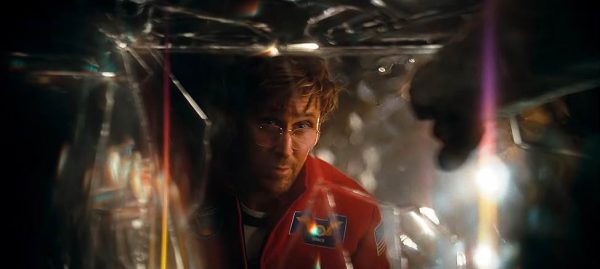
Project Hail Mary centers around the character Ryland Grace, who wakes up completely alone on a spaceship several thousand lightyears away from his apartment, even though he’s not an astronaut, which he states multiple times. As he slowly regains his memories, Grace must figure out why the sun is dying before Earth freezes and the human population goes extinct.
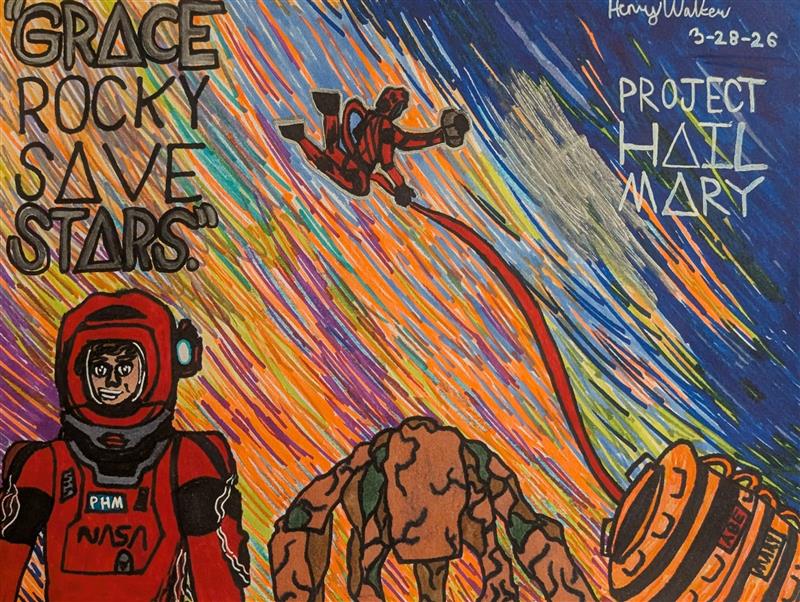
Throughout the story, Grace must learn to communicate and interact with a very ADHD alien, who he names Rocky. While Rocky can be difficult to work with (partly because of the lethal differences between their atmospheres), the pair of interstellar voyagers become close friends, saving their planets as per Rocky’s iconic catch phrase, “Grace Rocky save stars”.
A Small but Effective Crew
Ryland Grace

We cannot stress this enough, he is not a scientist— except, well, now he is! Before going off into space to save the world (and hang out with a new, unfamiliar best friend), Ryland was a sweet science teacher at Grover Cleveland Middle. Unfortunately, his easy-going job crashes when he’s recruited into a program that has one goal: Saving the planet from sun-eating alien dots. Yes, it turns out he’s cut out for this. He’s an optimistic, yet cowardly and unlikely hero. Ryan Gosling’s performance in this role feels like the perfect fit— he’s witty, smart, and can nail comedic bits at an impressive rate. This is a great first step for Gosling as he branches out into nerdier sci-fi fandoms and promises great things next year for his debut in Star Wars: Starfighter!
Rocky

Rocky is our resident alien— well, not the Tudyk kind. Voiced by James Ortiz, Rocky is an Eridian engineer, an extraterrestrial being sent out from his home planet, Erid, for the same reason as Grace; to save their worlds. Motivated by the ideas of having a new friend and getting to see his mate again, Rocky is instrumental in figuring out how to save his sun, as well as ours. Ortiz’s voice, which in the film is really a live computer translation of the alien’s native language, is comforting and friendly. His memorable performance brings a lot of laughs and an oddly impressive number of tears, and will no doubt be remembered for years on end in this sci-fi epic.
Eva Stratt

Portrayed by Sandra Hüller, Eva is the head of Project Hail Mary— yes, it’s namesake. She’s calm, calculated, and while she doesn’t tolerate nonsense, there’s a certain warmth to her that’s hard to describe. Hüller’s performance is memorable, as she teaches you to learn to love someone that’s so dedicated to one thing, which is no simple feat.
Officer Carl
Portrayed by Lionel Boyce from hit series The Bear, Carl is Eva Stratt’s body guard (although he’s privy to every single detail of a classified mission). He’s kind, stubborn, and straight-to-the-point. Oh, and he’s Grace’s biggest supporter. Boyce’s performance is hands down one of the best in the film, as he is great at dry comedy and shows an impressive dramatic range near the end of the story.
Amaze! Amaze! Amazing Visual Effects!
One thing the movie accomplishes better than most other book adapted films is the imagery. Often, movies based on books fall short from their inspirations due to the vibrant imagery an author can include to spark your imagination, and the real-life visualization doesn’t always live up to that mental image. This doesn’t become a problem for Project Hail Mary at all! Planet Adrian is as breathtaking as described in the novel, and the Hail Mary ship itself is exceptionally designed.
As for the real challenge, bringing Rocky to life, it’s safe to say that they nailed it. With a very complex combination of puppetry, CGI, and animatronics, we are granted a very faithful adaptation of the character. Having a physical Rocky puppet/animatronic body was instrumental (and we mean that literally) in both Gosling’s and Ortiz’s performance.

When it comes to the biggest character in the story– the ship itself– they went all-completely-out. While most blockbusters would save time (but not money) by making the ship almost entirely CGI, filmmakers Lord and Miller spared no expense to fully realize the description of the ship in the novel. Working with their very talented crew, they were able to construct a custom-built shell and real modular components. This was coupled with over 150 real digital HD screens and 750 boxes to fill the entire set. In a movie where everything takes place in space, the protagonists’ spaceship is the most important location, and man, did they kill it.
Rocky’s Native Language: The Music of Project Hail Mary
In Project Hail Mary, the character Rocky uses musical chords to communicate with other Eridians, a special language that Grace must decode to properly work with the alien. Of all the whimsical elements in this movie, the score is perhaps one of the most important of them, as it has its own language of sorts, impacting the tonal shifts and emotional responses we feel in the film. Daniel Pemberton is no stranger to working with directors Phil Lord and Christopher Miller, as he composed the music for the Into the Spider-Verse trilogy starting in 2018. Pemberton is also known for composing the scores for Yesterday (2019), Birds of Prey (2020), and Amsterdam (2022), as well as the Enola Holmes films that brought a cheerfully modern sound to the classic late 1800s story.

The movie does an excellent job of showing the near-perfect vacuum of space, which doesn’t allow much sound to travel. While it creates a very realistic depiction of nobody hearing your screams in space, it leaves the music to do some heavy-lifting, but boy does this soundtrack carry! The first moments of Ryland waking to the sight of a mechanical arm in the middle of space might sound ominous, but Pemberton instead chooses to make “Ryland Grace, Cognition Assessment” a dreamier version of the main theme, creating a sense of weightlessness and hope early on in the film.
“You Were Loved (Burial)” introduces the emotional aspects of this movie. Even though Grace can’t remember much about his recently deceased crewmates, he remembers how they made him feel, and the vague backgrounds they shared. This sendoff into the stars is beautifully enhanced by the score and shows the emotional depth Ryan Gosling can have when placed in the right story.

“Time Go Fishing” lays down the dramatic force behind the film. It is the single most epic track you will ever find in a movie and it emerges triumphantly among the various crashes and impacts from Ryland’s flails outside the Hail Mary ship, which become more intense when you sit in a Dolby enhanced theater. The composition is so epic that it sounds more fitting as a trailer cover, but it’s still powerful enough to make you clamp down in your seat and spill your popcorn!
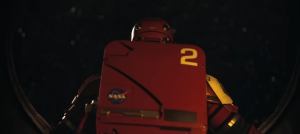
The final two tracks of the film may have the best sound of the score. “Believe in the Hail Mary” is widely regarded as the film’s main theme, though it doesn’t exactly use the direct melody of the main title as heard in various other tracks like “Grace Go Home” or “Goodbye My Friend”. Rather than the direct melody, “Believe in the Hail Mary” uses chord progressions that follow the same pattern, perhaps emphasizing Grace’s new bond to Rocky who speaks in chords. Whether this connection is intentional or not, the song has a rockin’ ending, using a powerful orchestra and Pemberton’s signature rock sound to convey the feeling of success and total euphoria.
“Amaze! Amaze! Amaze! (Life on Erid)” is a sort of epilogue to the film, showing what happens to Grace and Rocky after their incredible adventure together. The music is filled with pure joy as a techno powered orchestra plays the main melody of the film. Choosing to write this song in the key of C major, which is considered the happiest key signature in music, emphasizes the joy Grace feels at the end of his story, and makes us feel extremely satisfied with the film’s ending. Ultimately, the hope these tracks carry is what makes them so fantastic. The hope of humanity’s survival is an important part of this movie, and Pemberton took the assignment far beyond the stars!
Comparing the Film and the Novel
There are only a handful of differences between the cinematic Project Hail Mary and the original book, though there are a couple details you should know before seeing it yourself. Let’s get the few drawbacks about these changes out of the way first.
The Disappointements

To start us off, the beginning of the movie is much different than the book. In the 2021 novel, Grace must figure out who he is, the computer doesn’t just tell him like it does in the movie. The first three chapters are spent with Ryland slowly remembering who he is, what he does, and why he is in space. In fact, it takes him one whole chapter to realize that he isn’t even on Earth! He explores the lab and the dormitory, but isn’t allowed into the cockpit until he remembers his own name. While the movie can’t spend too much time on this section of the story due to time constraints (the final cut was still two-and-a-half hours long!), it would have been nice to see this progression and some of Grace’s earlier expository memories which were ultimately cut.
Near the middle of the movie, we see the Earth-based astrophage research facility explode in a flashback. The scene itself is executed perfectly, but its sequencing in the movie is not particularly well-planned. This event should have been shown after Rocky saves Grace while retrieving the taumoeba sample. The scenes during Rocky’s recovery aren’t bad, but they do become a little dull for some audience members. Showing another devastating loss in this flashback would have added some excitement to what could be considered a slow third act opening, even tying in to Grace’s current situation on the mission. Again, this movie is great for what it is, and doesn’t really need fixing. However, choosing to put this scene after the lung crushing tension of “Time Go Fishing” would have prevented less invested audience members from becoming restless.
Finally, to express the last major complaint some people have with the cinematic interpretation of Project Hail Mary, let’s reference The Martian. Despite its multiple inaccuracies like the absent lethal soil perchlorates or the story’s unrealistically violent sandstorm opening scene (that’s right, The Martian is bullshizz— you heard it from The Paw Print first!), the 2015 film did a great job showing how Mark Watney uses science to his advantage to survive on Mars. Where the Project Hail Mary film shines is showing you the emotional connection between its characters and making you feel the gravity of the end of the world. Unfortunately, if you’re looking for some more intricate scientific explanations, you won’t be finding them in this movie.
Most of the details cut from the film are just dead space that would confuse less mathematically inclined viewers, but certain pieces of scientific and logical information were valuable, and would have added higher stakes to the overall plot. The film does not address the crucial problem of Grace’s lack of food at the end of the story, as well as how he solves this. The finer details of astrophage like its inability to deviate from its consistent temperature of 96.415 degrees celsius could have made for a better understanding of its dangerous potential.
Furthermore, using nuclear strikes on Antarctica to increase global warming might sound crazy, but it would have better reflected Eva’s desperate situation with buying time for the Hail Mary’s probes to return to Earth with a solution! Plus, the taumoeba contamination of Grace’s ship and the rapid sterilization he performs on the Hail Mary after collecting the sample could have added some excitement to the scenes others consider a little slow for their liking during Rocky’s recovery.
It’s important to remember that this movie would be nearly four hours long if all of these sometimes trivial details were included, but many of these factors could have provided some advanced stakes and better plot development for the story. Just remember that these are only nitpicks from someone who has read the book, go watch the movie and judge for yourself which version you prefer!
The Highlights
There are several changes that greatly improved the emotional range and connection between characters, particularly when it comes to Eva Stratt. In the book, Stratt is rather cynical and cold. She has no emotional tolerance at all and doesn’t show any sign of caring for Grace’s well being. In the movie, the character is very different! Her stern yet caring disposition is a much needed change from the novel, providing her with a sense of wonder and optimism.

One of the most shockingly effective additions to the film is Stratt’s karaoke performance. According to a Jimmy Fallon interview with Ryan Gosling (see here at time stamp 7:11), Gosling approached Sandra Hüller after hearing her singing in a dressing room, and urged her to sing in the movie. When a karaoke background scene emerged in the script, Hüller agreed to perform a section of “Sign of the Times” by Harry Styles, and the film is all the better for it. As it turns out, Sandra Hüller has a really good voice! This performance enriches the character of Eva Stratt, making her more relatable and helping set up a heart wrenching decision she makes near the end of the movie. Giving her a warmer role in the story adds to the overall theme of hope in the movie, providing a more fulfilling ending as well.
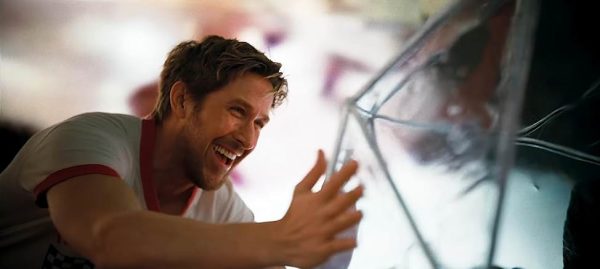
There are three final standout differences to discuss. First, the Hail Mary is fitted with an extra virtual reality room, something that was never mentioned as part of the dormitory section in the book. This adds so much to Grace and Rocky’s bonding early in the movie, and allows him to show the alien how certain things like surfing, fishing, and karaoke work in the funniest ways. Neither of these characters had this tool in the book, but giving Rocky some personal experience with human customs made his bond with Grace feel that much stronger! On top of this, the live audio computer translation of Rocky’s language makes for a better viewing experience, preventing us from having to read subtitles for two solid hours. It’s a nice cinematic touch!

Like the Hail Mary’s centrifuge, the second change revolves around Rocky’s ship, the Blip A, as it is named by Grace. Similarly to the book, each character gives the other a present for their respective societies to know about each other’s races. Grace gives Rocky a laptop since Eridians have not figured out how to build computer systems yet, and Rocky leaves behind his Xenonite workspace, made of a solid form of Xenon not yet understood by humans. The difference in the movie is that, in addition to the Xenonite, Ryland asks to see the inside of Rocky’s spaceship, and it is visually stunning! Changes like this show the wonder that good science fiction and cinema can bring.
Last, but absolutely not the least, is the final scene of the movie. We’ll try to minimize spoilers, but this is one of the most valuable elements of the film for you to know about. Who would have thought the ending would be an important part of the story?! Whaaaat???
The final scene depicts life on Rocky’s home planet Erid, and it’s absolutely incredible. The Eridian environment was briefly described in the book, but it never really developed the imagery to the same extent as what the film shows us. Getting to see this in combination with the joyful final score composition by Daniel Pemberton is the perfect way to end this film, and any complaints about other changes in this movie will become irrelevant nitpicks when you watch this scene.
We Believe in the Hail Mary: Our Final Thoughts and the Future
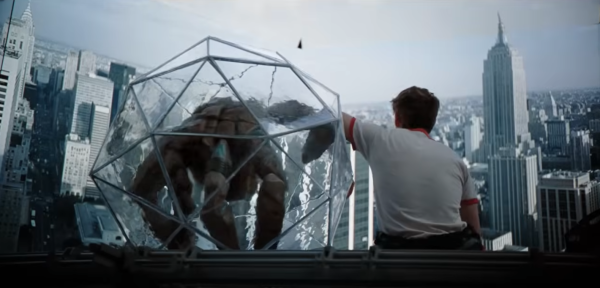
Project Hail Mary is only a single standalone novel, and therefore a sequel film is unlikely at the moment. However, the future of science fiction is bright. According to author Andy Weir as reported by Forbes, the 54-year-old writer has a few Hail Mary follow up ideas in “bits and pieces” that haven’t quite come together yet. For now, Weir is focusing on a new story with a currently unrevealed title that promises to explore artificial intelligence. Weir claims that this subject is “kind of in my wheelhouse because I know how computers work,” so hopefully we can expect some solid science fiction from him in the future, and perhaps a later movie adaptation.
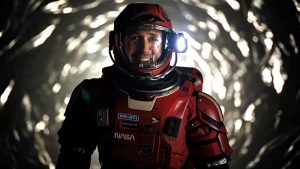
As for Project Hail Mary, a sequel would be welcome, though unnecessary. If Amazon MGM Studios can keep up their good work, Andy Weir and the Lord and Miller team would be trustworthy to properly continue Ryland Grace’s story with Rocky as portrayed by Gosling and Ortiz. But the simple truth is that this movie’s conclusion is so good, you won’t want to come back for more! This usually isn’t something you want to hear about a movie, but in this case, the finale is so fulfilling, a sequel would almost have too much risk to live up to the original story.
Perhaps a more aggressive alien civilization will approach Erid and Earth, requiring Grace and Rocky to team up again on a mission to save their planets once more. Maybe a meteorite larger than any recorded in galactic history will speed toward one of the planets, and our heroes will find some way to destroy or stop it with their newfound knowledge of astrophage and science in general. Could a black hole threaten to swallow the entire universe and approach the big crunch, forcing this dynamic duo back into experiments with radiation and time dilation? Weir has a unique sense of storytelling, so who knows what could be cooking inside his head!
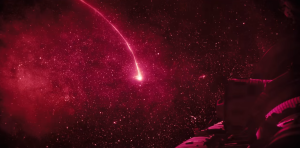
Meanwhile, the film is soaring at the box office, crossing the $300 million threshold as of March 29. Its popularity with audiences and critics makes it an unstoppable force heading into next year’s awards season, and Project Hail Mary is absolutely our pick for Best Picture so far for the 2027 Oscars. Even if it doesn’t win, the movie at least has set a new standard for science fiction stories. While many sci-fi plots follow darker and occasionally dystopian tones, this film prepares the world for a new age of happy endings and hopeful new beginnings as the next steps for the science fiction community. As we wait for Weir’s ideas to be realized in the form of a sequel novel or film, Project Hail Mary shines brightly on its own, a beacon of hope for the world to aspire towards.