




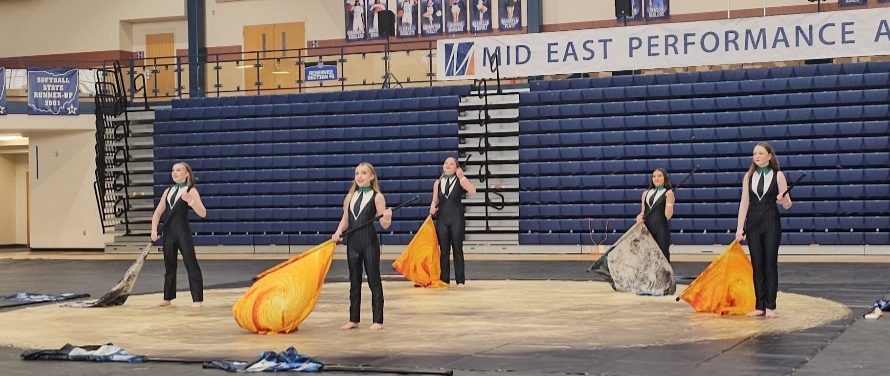









Flags spin through the air, rifles flip with extreme precision, and students move in sync to music in an often-overlooked sport: Color Guard. Interestingly, Color Guard traces its early routes all the way back to the Roman Empire, where legions would carry military banners. This tradition would continue into European history and took prominence in the 17th century where a group of soldiers would “guard” the unit’s “colors” or their flags. Despite how graceful the performers look, Color Guard is intense and physically challenging yet rewarding all the same.
Color Guard is a part of the Marching Band that uses dance routines and equipment to turn a field into a high-energy stage. They use spinning equipment such as flags, rifles, and sabres, referencing their early roots in military history. Color Guard tells a story through their performances, using the music played in the background. Color Guard performs in the fall alongside Marching Band, which, fittingly, is called Fall Guard, and then Winter Guard, which as I’m sure you can guess, performs in winter.
Color Guard performs in front of judges and is rated based on the follow categories: the difficulty of the routine, the execution of the routine, the synchronization of the team, and the appeal of the routine.
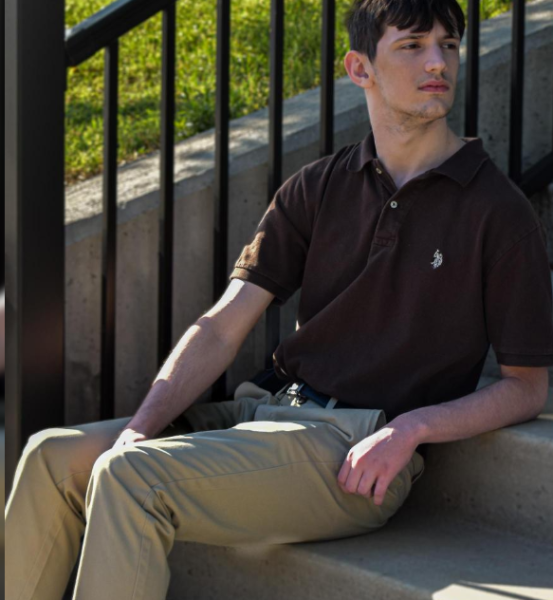
For more information, I interviewed Harrison Color Guard member junior Lily Ann Foster. She first joined Color Guard simply due to wanting a gym credit at Ross. However, very quickly, she fell in love with it.
A typical rehearsal includes their coach giving them a choreography and the team practicing that choreography. When asked what her first rehearsal was like, Foster had this to say: “My first practice overall was really hard, I didn’t know what to expect and all of the people around me could do crazy things, which discouraged me because I wasn’t doing very well in the beginning.”
Practices are physically challenging and exhausting, every hour makes the final performance all the more worth it. In the fall, Color Guard practices around 6 hours a week with the band, and then up to 12 with practices including only the guard. Foster puts in time off the field as well, practicing on her own accord around 4 hours a week. At practice, the guard runs through their choreography and takes notes from their coach.
Foster’s favorite performance was last year’s Winter Guard performance at Wright State where guards of all ages watched Harrison perform.
Recently, Color Guard has been successful enough to advance to a new class, moving up from the Novice Class to now perform in the Regional A Class marking a major achievement for the program. If after reading this article you feel inspired to try out for Color Guard, auditions will be held on 5/11, 5/12, and 5/14.
When asked if there was something she wished others knew about Color Guard, Foster responded with: “I think something I wish people knew about color guard is that once you start it’s really hard, but if you give it 2-4 weeks you will be completely fine. It takes a lot of hard work, but it’s so rewarding. It’s so much fun and I think anyone that tried it would enjoy it.”
What looks like graceful movement to the audience is actually a display of athleticism, artistry, and hours and hours of practice. Every performance Color Guard does is a chance to make the extraordinary look effortless.