



With political tensions increasing, Hollywood stars and television hosts being publicly censored, and endless debates about free speech taking a toll on the sanity of the collective American people, we have to ask an essential question: “What is the state of free speech in Hollywood and our country as a whole?” Let’s break down each part of this question, moving from McCarthyism, through recent late night television events, and finally, to how these recent news stories could impact our lives as students, and the entertainment industry at large.
A quick disclaimer: The Harrison Paw Print remains a neutral news site with no political agenda, and we will not be pointing fingers or asserting blame on any particular modern political, social, or celebrity group. As your entertainment editor, I rarely step away from the more fun articles like movie reviews and generalized opinion pieces, but I wanted to step out of my comfort zone to write about something that really matters right now, especially in the entertainment industry. While we will explore a few topics and ideas you may have strong opinions on, I promise this article is purely for informative purposes and is only intended to keep our school aware of current events. These issues could affect all of us and it is important to stay informed.
On October 1, 2025, Jane Fonda, a prominent actress and political activist, relaunched the Committee for the First Amendment. This is a pretty big deal, as the committee was first created during the “Red Scare” in 1947 by Fonda’s father, Henry. It was a response to the rising threat of McCarthyism, a political doctrine that attempted to prevent the spread of communism through reckless means. This brings us to the first question: What is McCarthyism and how did it affect pop culture and celebrity figures?
McCarthyism during the “Red Scare”

Joseph McCarthy was a senator who opposed communism, using it as a topic that would boost his political platform and increase his public support. During the era known as the “Red Scare” in the 1950s, McCarthy claimed to have a list in his possession that would expose over 200 Americans involved with the Communist Party. He radically accused them each of treason against the United States and loyalty to countries supporting communist beliefs. This would begin a time when nobody was safe from persecution by the government, which had taken radical measures to ensure the security of the nation.

These methods limited the free speech of prominent actors and celebrities like Henry Fonda, as well as the voices of the press and plenty of other ordinary citizens. If anyone thought you might be even slightly involved with the Communists, you became subject to legal harassment, gaslighting, and ridicule by political figures and members of the public. These accusations forced many people out of their jobs and put their livelihoods in jeopardy, with many even facing legal charges.
In response to these insane government actions that limited free speech and our constitutional rights, several entertainment legends including Henry Fonda, Lucile Ball, and Judy Garland developed the Committee for the First Amendment, the same organization championed by Fonda’s daughter now. Read more about McCarthyism and the “Red Scare” at the official website of Dwight D. Eisenhower’s Presidential Library and on Middle Tennessee State University’s website here.
Relaunching the Committee
CNN reported on the 9 to 5 star’s announcement, describing her intentions with the organization. According to the news outlet, Jane Fonda stated, “I’m 87 years old. I’ve seen war, repression, protest, and backlash. I’ve been celebrated, and I’ve been branded an enemy of the state. But I can tell you this: this is the most frightening moment of my life.” Fonda is hard at work forming her protest committee and has already gained a list of petitioners joining her mission, including experienced entertainers like Julia Louis-Dreyfus, Alan Cumming, Whoopi Goldberg, Winona Ryder, Nicholas Cage, Ben Stiller, Sally Field, and Rosie O’Donnell. Other more recognizable petitioners in modern entertainment include names like Thunderbolts star, Florence Pugh, Josh Gad, actor from Frozen and Marshall, The Bear actress, Ayo Edebiri, singer/songwriter, Billie Eilish, Star Wars actor, Pedro Pascal, musician, John Legend, and many more which are listed on the official website for the organization.

The Barbarella actress has had plenty of experience with historical events like the Vietnam conflict, so she has an understanding of when political and social situations are becoming intense. Clearly what she has seen recently in our country is scaring her and many other prominent pop culture figures, but are things really so tense in our government that we need an organization defending our free speech? I mean, even Young Sheldon star, Iain Armitage, is listed as an entertainer in solidarity with Fonda’s relaunched movement, and he’s only 17 years old! So, what exactly is making everyone so concerned?
Late Night Television Tensions
On September 17, ABC Studios removed late-night television host and comedian, Jimmy Kimmel, from national television. This occurred after a controversial statement regarding the assassination of political activist, Charlie Kirk, on Monday, September 15, which can be found in this video of Kimmel’s opening monologue around the timestamp 6:10.

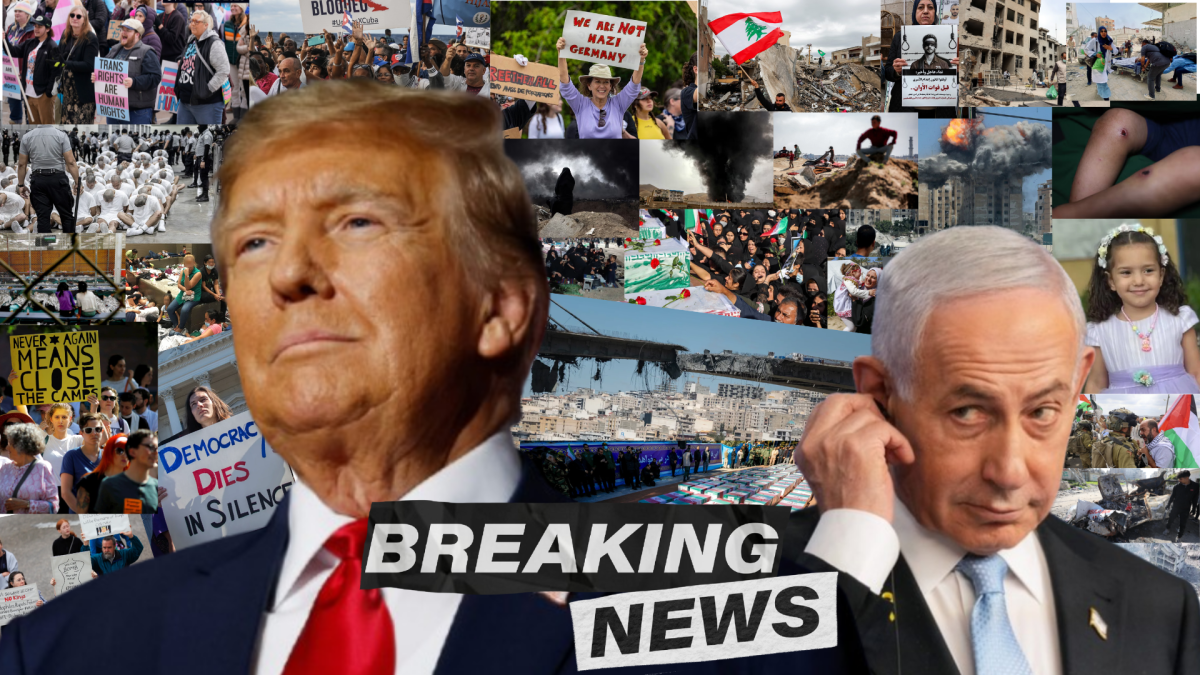
These events have been especially controversial because of widespread sentiments that this was an attack on free speech instigated by political pressure from our government. This belief was strengthened by President Donald Trump’s description of his disapproval for Kimmel’s show in such statements on the social media platform X, formerly known as Twitter, “Congratulations to ABC for finally having the courage to do what had to be done,” and, “Kimmel has ZERO talent, and worse ratings than even Colbert, if that’s possible,” as previously reported by USA Today. Social activists and critics of the government have used these quotes as evidence towards political interference with ABC’s decision to cancel Kimmel’s show.
Kimmel’s cancellation is not the first example of potential limitations on free speech in the entertainment industry this year. Stephen Colbert, host of The Late Show on CBS, will be cancelled in May of 2026. According to an article from AP News, the cancellation will have a major impact on the entertainment industry because, unlike Jimmy Kimmel Live!, The Late Show is not Colbert’s personally owned series. In fact, the show had previously been hosted by late night icon, David Letterman. Furthermore, Colbert will not even be replaced. Instead, the timeless series will be dissolved entirely after running for over 30 years, having premiered on August 30, 1993. Now with the Jimmy Kimmel situation, many individuals feel like late night television hosts are being targeted by politicians with strong conservative agendas.

Despite ABC’s initial decision, other late night television hosts, actors, entertainers, and even general members of the public rallied against the Disney-owned company for Jimmy Kimmel’s return. In protest, many people even cancelled their Disney+ and Hulu accounts! Their petition was successful, and ABC reinstated Jimmy Kimmel Live! on Tuesday, September 23. According to Kimmel, the controversial statement from his previous monologue was intended as a joke and was not meant to offend any public figures or any of Kirk’s relatives. See the full monologue from September 23 here.
The Impact on Harrison Students
Now that Jimmy Kimmel is back, free speech is safe. So, problem solved! Crisis averted! Right? Not according to Jane Fonda! In the CNN article referenced earlier, Fonda explained, “The stakes are too high, and silence is too costly.” It seems that the concern hasn’t left anyone yet, and Fonda is rallying the entire entertainment industry to stand up for their constitutional rights. The political climate becomes very confusing and chaotic when liberals and conservatives clash with each other on such a dramatic scale. Both sides of the argument make it difficult to see where free speech actually stands in all of this. So, is the first amendment actually in danger? Even more importantly, how does this affect us as students in high school preparing to enter the adult world? To answer these pressing questions, we reached out to students from Harrison to get a clearer idea of the situation.

The most common reaction to Kimmel’s cancellation was widespread bafflement and disappointment at ABC’s decision. Sophomore, Parker Evans, described his confusion with the overall situation, stating, “He hadn’t really crossed any lines with any jokes, not like Jon Stewart does on The Daily Show.” Jon Stewart, a late night television host and comedian, is notorious for making fun of Donald Trump, and it’s surprising that Kimmel was cut from the air before the former, due to the severity of Stewart’s jokes in comparison to Kimmel’s.

Chy Campbell also explained her position on the cancellation, “It was publicized as a direct attack on our freedom of speech, and it was. I think if they didn’t reinstate him things would have gone way farther down hill way faster.” President Trump has made several comments online hinting at possible future late night television cuts, including names like Kimmel and Jimmy Fallon from The Tonight Show Starring Jimmy Fallon, so Campbell’s interpretation of these events is very understandable with political pressure seemingly falling on studios like ABC.
After the initial shock left students, other feelings began to set in. Lilly Newman expressed her frustrations with the decision, claiming, “They have threatened our first amendment rights by a few hundred miles!” Her discontent for the situation is understandable, but do students have any deeper reasons to be angry beyond the inherent principle of free speech? Shay Uxer does! When asked for her opinion on Kimmel’s cancellation, the Senior replied, “I watched Kimmel much more than Colbert, so I had a deeper connection with him.” Uxer described the injustice of limiting a person’s ability to promote their beliefs, highlighting other issues that should be receiving more political attention than this subject, such as, “preventing gun violence and mass school shootings.” It seems wrong that an entertainer being cut from television is more shocking to the world than yet another school shooting. All of these issues are certainly worth some thought!
Even students who didn’t always support or agree with Jimmy Kimmel had opinions on his cancellation, often in favor of his right to free speech. Ashlee Spradlin explained, “I personally don’t care for Kimmel. I get some weird vibes from him, but I don’t think he should’ve been cancelled for his comments.” Late night television hosts have very strong personalities and they often perform with jokes that make others uncomfortable. Jimmy Kimmel could be hilarious if you are the biggest fan of sarcasm to ever walk the earth, but these jokes could come across as weird and overly harsh if it’s not your thing. Despite not always agreeing with Kimmel’s sense of humor, Spradlin seems to believe that he should have the same constitutional rights as all other Americans.
One other anonymous student completely disagreed with Kimmel’s political opinions, but claimed they were “stoked” to see his return to Jimmy Kimmel Live!. They explained, “I was a little mad because despite our two different political views, I still liked seeing the videos of him.” They went on to say, “I genuinely enjoyed what he had to say so the fact he was ‘cancelled’ really angered me.” This proves that Harrison students with different opinions can agree to disagree when it comes to our personal political beliefs if it will defend our constitutional rights.
So, what exactly is the impact on us in the eyes of our student body? Naomi Bucher astutely commented, “I honestly think that if no one is exposed to opposing opinions, then they will never find a voice of their own.” Perhaps, with freedom of speech comes the responsibility to stay informed of all sides of an argument, something that limiting the right to speak freely would demolish. Bucher’s point seems to be that we need free speech to form our opinions on everything, political or not. Shay Uxer exclaimed, “It’s extremely saddening,” in reference to the entire Jimmy Kimmel debate, adding, “It shows students that they have little freedom in the world today.” These are all very in-depth political ideas which you may or may not agree with, but it seems that different corners of our student body can agree on at least one thing. Free speech is essential and is what makes us all unified Americans.
Hollywood and Political Pressure
Centering our focus back on the entertainment industry, these recent political events could easily affect the movies and television series currently being written and developed.
For decades, the biggest influence on film has been the real world. Freedom of speech is arguably the most fundamental and essential right in America, and cinema culture has allowed this idea to be kept alive through poignant on-screen stories. Star Wars acted as a science fiction commentary on a corrupt government overly focused on political domination, an idea many Americans feared in the aftermath of the Vietnam conflict and the war against communism. Films stemming from novels like Fahrenheit 451 or even Harry Potter can show the dangers of limiting public knowledge and silencing the media through government control. Even more recent films like Superman and the upcoming Wicked sequel further develop how journalistic integrity and spreading the truth are the most important defenses against tyranny.
With a tense political climate, film studios could pull back on certain plot elements that feature dictatorships, social injustices, and other situations that could be interpreted as making a modern political statement in their productions. Ashlee Spradlin returned to state, “There will definitely be less innovation.” The Harrison Junior suggested that the many remakes over the past several years could be the result of an intensifying political climate, “Everyone’s scared to come up with something new.” Even if such similarities were unintentional, no film executive would want to be blamed for choosing a political side, especially if their movie’s plot was created years before these real world events unfolded!

One example of this possible effect can be found with Marvel Studios’ president and prominent producer, Kevin Feige. The film executive has explained his goals for the superhero franchise for the past several years, describing exactly where the comic book movies will take us after Avengers: Secret Wars in 2027, the final entry in Marvel’s Multiverse Saga. The next step for the Marvel Cinematic Universe (MCU) is intended to be the Mutant Saga, featuring tense political dramas involving teams like the X-Men, the Avengers, and possibly even the lesser known Inhumans. These teams bring divisive topics onto the silver screen, including debates over human rights, genetic experimentation, and questionable authorities in the government.
If real life political issues continue to intensify, could this phase of superhero films be delayed to avoid any major controversies? Would certain elements of these future movies and series be watered down to prevent any significant real world overlap? Parker Evans, a Sophomore and student filmmaker says, “Hopefully… no. Filmmakers and showrunners being scared by such a tactic would be extremely disappointing.” Another student has great faith in the strength of the entertainment industry, claiming, “I think that in Hollywood they would likely make more movies with a greater political opinion, whether they’re a democrat or a republican, I think either opinion will be shown through a lot of future Hollywood movies.” Hopefully these recent news events won’t influence creative decisions in the entertainment industry too much.


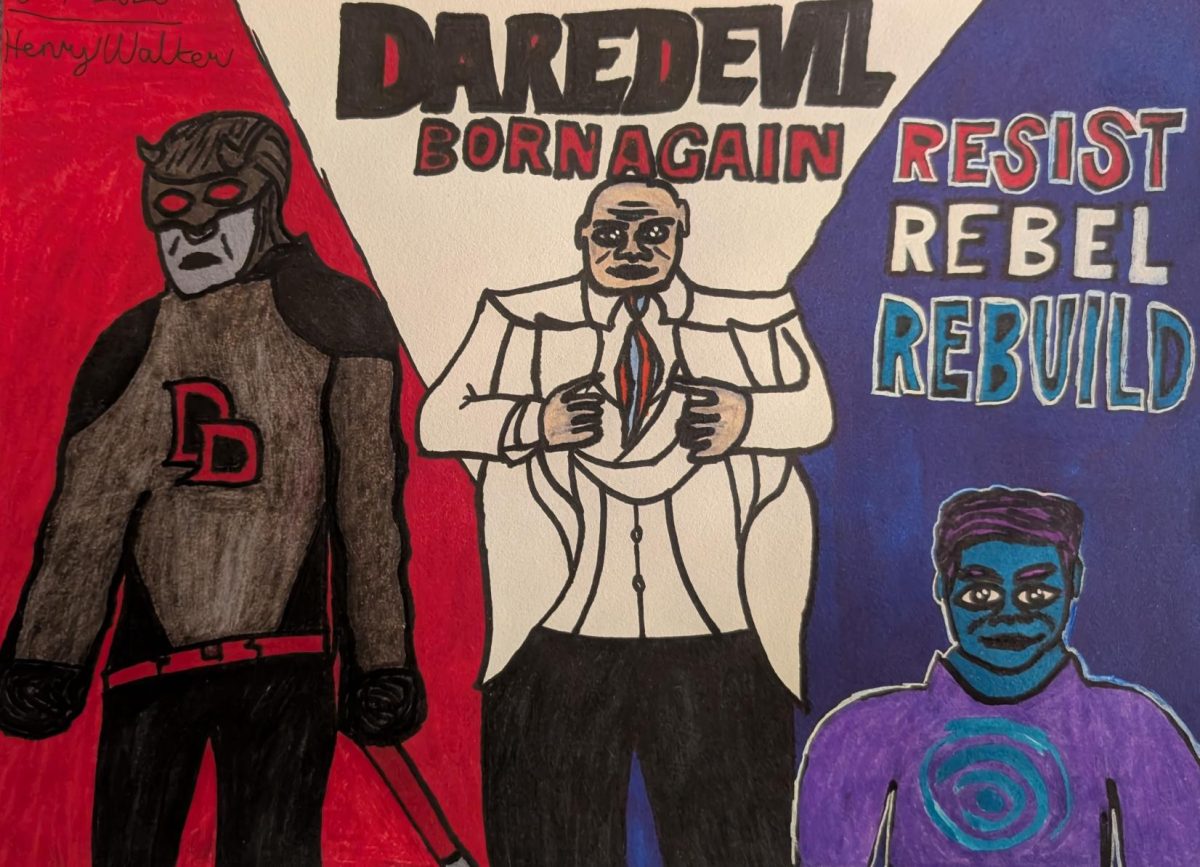
One of the most important aspects of Hollywood and filmmaking is the way writers, producers, directors, actors, and anyone else involved in the creative process draw attention to important social and occasionally political issues when we lose sight of them. If we take that feature away, what is the point of having free speech? If we don’t use it, we can’t protect it! Are shows like Andor or Daredevil: Born Again telling us that our president is a dictator? Of course not! They only mean to show us what happens when we lose control of our rights, especially our right to express ourselves freely.
Does the Jimmy Kimmel issue mark the death of free speech in our country? Probably not, but it helps us think of what could have happened if his audience had stayed quiet. Fonda’s movement is a testament to Hollywood’s unity and America’s, even in a divisive political climate. One thing is clear regardless of our personal political opinions or social issues: people agree that free speech is important, and we need to remain aware of our inherent American rights.
The Paw Print would love to give a huge thanks to all student respondents in this article. We understand these are controversial issues, and we thank you for putting yourself out there!