















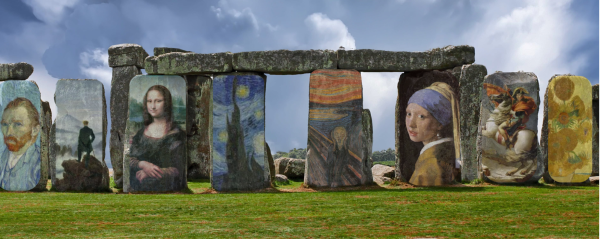
The building you live in, the music you listen to, and the movies you watch while snacking are all examples of art. According to the Stanford Encyclopedia of Philosophy, Art is the application and expression of human creativity. In every period of time, art is heavily influenced by culture, meaning that most art will be forgotten with time as culture changes. Some art, however, stays relevant as decades pass and culture changes. But what causes this art to stay?
There are five major reasons as to why art can stay influential:
Emotional Impact: The art appeals to emotions by showing a sad scene or a happy family causing people to feel strong emotions.
Cultural Significance: The art shows features of cultures and lets you see into a community.
Innovation: The art was a major step in learning something new or it was advanced for its time.
Skill: The art does what it’s trying to do really well.
Subject Matter: The art shows something important like a war or famine, it can also be conveying something like human nature.
Art is also affected by the form it takes and the material it is made of. Making a sandcastle at the beach won’t last as long as writing something in granite. When made with strong materials it can keep its original look and not get destroyed. Art can be stored because its look can be preserved without it changing.
Humans have many different cultures preserving many different types of art. Ancient, religious, and tribal art is still around because humans are preserving it because of their culture.
There are many examples of art that have these features:
Ancient architecture from tens of thousands of years ago is still relevant today because of its historical importance, how it helps us learn about prehistoric culture, and how it shaped modern architecture. The Sistine Chapel’s ceiling is still an incredibly skilled artwork hundreds of years later. The artwork is very important to the Catholic Church making everyone in the Catholic Church want to preserve it.
The Egyptian Pyramids, built around 4500 hundred years ago, are some of the biggest pyramids in the world. The Egyptians used many advanced techniques to build them and at such a scale where they are in good condition today. Historians are still studying how they made the pyramids and tourists love to see them.
Thinking in more modern times the Eiffel Tower was a groundbreaking achievement made in 1889. It shows France’s cultural heritage and ingenious designs. The Eiffel tower is one of the biggest tourist destinations in the world.
The world is evolving, and new technologies are being built leading to art spreading farther, making it easier to learn and create, and there are new ways to make it. You no longer need a person to sit still for days to use as a reference, just take a picture and they will sit there as long as you want. All these new features for making art makes it even more popular than before because of the ease of access. The ease of access means that most of the world can see your art which makes it easy to find your crowd. However, the new features make most art lose popularity quickly.
What makes art last is the importance to people. When art appeals to people they want to see it longer and remember the past. As long as humans find meaning in art it will survive beyond the time it was created.