
















When you hear the words ‘Disney’ and ‘Movie’ coupled together, what do you picture? An award-winning, hand-drawn animated film from decades ago, sure. 3D-animated musicals, absolutely. An emotional Pixar rollercoaster for kids, I mean, come on. Often, people neglect their live-action films– No, not the remakes.
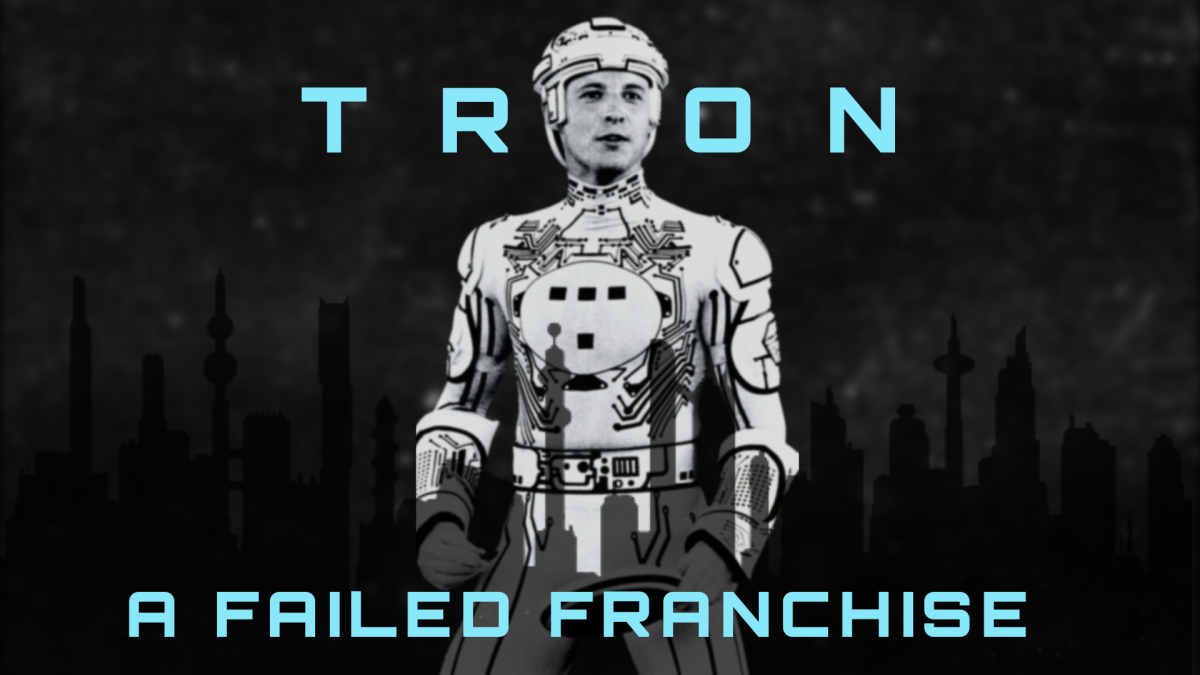
When it comes to Disney’s live-action outings, it’s never been perfect. Though, there was a time when they’d reach an all-time low, with a very unexpected failure: Tron, in the year 1982, which would spawn an entire franchise, with highs and lows like no other..
Tron (1982)
Before we get into the film itself, however, we have to jump back to the beginning, into the development, to have a complete understanding of how this phenomenon came about. Writer/Director Steven Lisberger was infatuated with video games, and the industry that was following, all starting with just a glimpse of the popular video game, Pong. Just like that, a full-fledged story formed in his head.
In an interview with The American Cinematographer, Lisberger described how the initial idea came to him at that moment, “I realized that there were these techniques that would be very suitable for bringing video games and computer visuals to the screen.” He continued, “And that was the moment that the whole concept flashed across my mind.” It was also inspired by Lewis Carroll’s Alice in Wonderland.
Lisberger’s Tron hit theaters in 1982, with the first true mix of live-action and computer-generated imagery (very early CGI). It pushed visual effects forward, and broke ground for future films to improve. Nowadays, you can find visual effects in almost every major film in theaters, or your favorite shows at home. Unfortunately, the film was disqualified from the Oscars, barring any chance at an Academy Award for the hours of design that went into the visual effects– which were viewed as cheating. To put it simply, the Academy had not fully grasped how impactful and revolutionary this endeavor really was.
In a double-whammy, audiences and critics were also caught off guard. Due to its odd nature, and yes, the visual effects, it was harder for people to completely understand the story. While being distracted by CGI is almost completely normalized in modern cinema, moviegoers preferred practical effects.
Tron was not a financial failure in the slightest. It made back its budget, with some left over. However, it was also outshined by bigger movies in theaters at the same time. Most notably Indiana Jones: Raiders of the Lost Ark (1981) and E.T. the Extra-Terrestrial (1982), both directed by the famous Steven Spielberg. While it was produced by Disney, Lisberger didn’t have the same status as other popular filmmakers at the time, and never really would.
What is now held up high as a cult classic, Tron was ill-received, yet groundbreaking film that would somehow jumpstart one of the most notorious franchise failures in modern history. Thought this was bad? Let’s talk about how far it really branched out.
Tron: Legacy (2010)
Following Tron’s disappointing feedback, Disney quickly forgot about any plans of a franchise. Although, almost two decades later, the film’s cult following began to grow. In 2003, Lisberger helped develop a video game sequel, which began rumors of an incoming sequel. These rumors, it turned out, were true, and development began in 2005. While the original film took inspiration from Lewis Carroll’s Alice in Wonderland, the sequel took heavy inspiration from L. Frank Baum’s The Wizard of Oz. Director Joseph Kosinski approached the project based on its visuals, reworking the story around Baum’s classic tale and what limits they really had on CGI.
Half a decade later, Tron: Legacy finally released, quenching fans’ thirst for more of the digital world they had learned to love. This was everything. With a $170 million budget, much better visual effects to bring the audience into a photo-realistic digital world, and an original soundtrack by popular duo Daft Punk, Disney had nothing but faith in this legacy sequel. For a little cherry on top, it was released on IMAX and in 3D.
Making $410 million worldwide, it was a technical financial success, but not what anybody had hoped for. Meanwhile, the audience and critics were split down the middle. Praise for its visual effects and style, but ripped for having a so-called “thin story,” and just being a “big screen experience,” without anything special about it. For the time, it was a very typical legacy sequel to be hitting theaters, fading into the crowd that followed.
For what it was, it did its job, and the next course of action was obvious… a third movie. Oh, and a spin-off cartoon. That, too.
Tron: Uprising (2012-2013)
Premiering in May 2012 on Disney XD, this spin-off was developed to fill the gap of time in between the original film, Tron (1982), and its sequel, Tron Legacy (2010). Given the real-life 28-year gap in between both films, an opportunity presented itself to expand upon the franchise, and more importantly, get more people into it.
Although it was canceled after only one season, it was critically acclaimed and captivated audiences of all ages. Winning a Primetime Emmy Award for Outstanding Individual Achievement In Animation, it will be remembered as one of the best projects put to screen by the Tron franchise.
This worked to introduce the digital world to a younger audience, and it succeeded. These kids would grow to love the digital world of Tron, just as previous fans had decades before. With that, a third film was imminent… in about twelve years time.
Tron: Ascension (The Abandoned Tron Movie)
A third Tron film began development in October 2010, the same year that the second film hit theaters. This would spiral into what any studio fears, development hell.
Outlined to be a direct sequel to Tron: Legacy, this film would be a “next step,” for the newly introduced Sam and Quorra, with its working title, TR3N. As time went on, screenwriters came and went. Some went on to produce television series, others just wanted to work on anything but the third movie, now retitled as Tron: Ascension.
Due to poor reception of Disney’s Tomorrowland (2015), the company cut costs by officially scrapping the film. Although, it was stated that the sequel isn’t dead, just shelved and awaiting its time to shine. In a final punch to the gut, Disney’s acquisition of Lucasfilm (Star Wars, Indiana Jones, etc.), and their expansion of Marvel Studios, the third film was finally put out of its misery and canceled. Out of development hell, but into the trash can altogether.
Then, out of a dark void, a light began to spark. A soft reboot, produced by method actor Jared Leto. Oh, what could go wrong?
Tron: Ares (2025)
This soft reboot was announced in 2017, though it quickly went under-the-radar, and the franchise itself went radio silent. Unfortunately, with the realities of time and soft reboots, only one star from the first or second movie would return… Jeff Bridges. While it was the third film, it would ignore/not acknowledge the previous sequel, or its ending. Instead, the soft reboot would be aimed at telling a new, fresh story. Instead of real people going into the digital world, this would be about digital people coming into our world. A concept that seemed extremely promising.
Released in October 2025, with a new-and-improved PG-13 rating and original soundtrack by alternative rock duo Nine Inch Nails, Tron: Ares shaped up to be Disney’s final attempt at giving this struggling franchise a heartbeat– it was a box office and critical failure. Many attribute this crash to star Jared Leto, following his many controversies in the industry and previous big-screen bombs (Ahem, Morbius) that are all on him. While the audience is split down the middle, many positive reviews are all about the soundtrack, with some popular online movie-based influencers suggesting taking it in as a visual album, letting the praised soundtrack serve as a distraction from all of the issues with the film itself. Its box office take was also damaged by running in theaters at the same time as popular horror sequel Black Phone 2.
This was the worst that the franchise had ever seen, and Disney quickly pulled the plug on any future installments.
An Overall Failure
The Tron franchise is nothing short of a roller coaster. While it would find some success at low points (due to spin-off video games that are now long forgotten), the series never quite found its footing. This was due to poor reception, low ratings, no money, and a one Jared Leto to finally finish it off. As of now, the series is canceled, with no future games, shows, or movies in development. But who knows? Star Wars came back, so did Indiana Jones.
They had a good run, almost half a century worth of creativity powering this fantastical, sci-fi story. Besides franchise is never truly gone, as there will always be the fans who remember it. Hopefully someday soon, the digital world will go online again.