

























Imagine you went to dinner with Mark Zuckerburg, and he asked you to cover the bill. That sounds ridiculous right? Well, that is essentially what he is asking of a town in Louisiana, but instead of dinner, he’s wanting residents to pay the bill of unsafe water and worse electricity.
There has been a recent expansion of people using Generative AI that has had destructive consequences on poor/rural communities and our environment in terms of water consumption, land use, and air. These effects are just a small part of what using AI really does, and it should be our job as people in a functioning society to know at least a few of its problems before we decide to make this a permanent part of our daily lives.
The background of where AI comes from
Artificial Intelligence (or AI) has been around for decades, but the first prototype of AI that was introduced to the public is not what people are familiar with now. The first AI program, Logic Theorist, was created in 1956 and since then has transformed into AI people know today, Algorithmic AI.
This type of AI is the kind that people tend to interact with daily – from scrolling through social media to looking something up. But now a new form of AI has pushed its way into the daily life of millions of people – Generative AI. This type of AI isn’t technically new, as certain types of chatbots like “ELIZA” have existed since the 60’s, but with the release of ChatGPT by OpenAI in 2022 it has become so accessible and popular that around 500–600 million people engage with it daily – people who never even knew about it before. This massive influx of AI usage has caused the need for data centers to increase tenfold.

Data centers are facilities that make our entire online existence possible as they collect, store, and process all the information given to them via our phones and computers. And because of the surge of people using AI, more data centers need to be built because the existing ones simply do not have the storage space needed to keep generative AI running according to Nicol Turner Lee and Darrell M. West.
But these new data centers are not just popping up out of thin air without any help. According to Corin Cesaric a journalist who visited one of these new data centers herself, “Amazon, Apple, Google, Meta, Microsoft and OpenAI are all spending massive amounts of money to drive that growth. Nvidia, whose chips are a key driver of AI’s data center advances, has pledged to invest $100 billion in OpenAI to build out at least 10 gigawatts of AI infrastructure in the coming years.”
This means that this AI movement is being pushed forward by billion-dollar companies, and it is important to remember that it is them whose pockets will be lined by the outcome of data centers- not yours. So it’s imperative that we as a society recognize not just where the push for AI is coming from, but why is it exactly that these companies are wanting AI to be such a big part of our lives.
Because again, it is these billion-dollar tech companies who are the ones making the money off of this AI boom, and it is the environment and poor rural communities that end up having to pay the price.
How Data centers effect communities
In the small town of Holly Ridge Louisiana, with a population of only around 2000 people, a massive 27 billion dollar data center is being built – and Drew Hawkings, a New Orleans based journalist who interviewed many of the families who live in the area, has been taking note of how this data has been impacting residents, “Though construction won’t be complete until at least 2030, Hyperion [the data center] will use about three times the amount of power than the entire city of New Orleans uses in a year. To feed the behemoth’s energy demand, the power company, Entergy, plans to spend $3.2 billion to build three new gas-powered plants.”
Something important to pay attention to is the fact that 3 gas powered plants will be built, and this is because these plants are powered by natural gas. While natural gas produces significantly fewer emissions than other fossil fuels, one of the major disadvantages of it is its methane emissions.
Methane is a potent greenhouse gas, with a global warming potential many times greater than carbon dioxide, not to mention that methane leaks during natural gas extraction, production, and transportation which contributes significantly to climate change.
But going back to the first part of that quote, a couple by the names of Robin and Joseph Williams who live across from the construction site where this center is being built have said, “Since Meta began construction, their water sometimes turns “rust-colored” and their electricity cuts off with no warning.”
Along with that there have been multiple cases where they said that Entergy (the company running this operation) goes out to the site, “I guess with them now, they’re constantly turning off the power, Joseph Williams said, pointing to the expanse of dirt, trucks and heavy construction equipment at the Meta site — what once trees and fields in front of their home was.”
Different institutions have been sounding the alarm when it comes to the energy consumption of these data centers, but none of them have really been able to say with tangible evidence that this energy consumption really hurts communities.
For instance, a study by Carnegie Mellon University and North Carolina State University, published in June, says “Electricity rates could rise 8% on average across the US through 2030 because of increased demand from data centers, along with cryptocurrency generation.” But with the case of Robin and Joseph Williams, there are now people who can say that they are in fact being affected by these data centers.
It’s also important that people recognize these big companies are building their data centers in rural (typically poorer) areas like Holly Ridge (where almost a quarter of the residents live below the poverty line)- because they know that they can get away with doing these harmful things to people who tend to have a harder time speaking out.
How data centers are affecting our water
Data centers for AI programs are of course nothing new, but with the increase of people using Generative AI, the need for more data centers has started to increase – which means the need for water to help cool these centers, and land to actually build them on, has increased too.
As Paris Marx, a tech critic with an award-winning podcast, explains, the reason that more water is needed for the increase of data centers is because, “Data centers use a lot of water, and the reason water is an issue is because you need to cool off the servers of the data center. One way of doing that is by making water circulate, so that makes the temperature go down. Another way of doing it is through air. In other places, instead of water, they use air, which demands more electricity because you need to create air conditioning systems.”
The main part that we want to focus on here is water. For large data centers, up to 5 million gallons – equivalent to the water use of a town populated by 10,000 to 50,000 people – is consumed per day, and around 80% of the water (typically freshwater) that is withdrawn by data centers just, evaporates after it’s used.
Jon Gorey, a staff writer at the Lincoln Institute of Land Policy, explains through interviews held with people who work at these AI data centers, “Even if they’re using reclaimed or recycled water, that water is no longer going back into the base flow of the rivers and streams… That has ecological impacts as well as supply issues. Everybody is upstream from someone else… Washington, DC, for example, will still lose water supply if Northern Virginia data centers use recycled or reclaimed water, because that water won’t make it back into the Potomac River.”
While some companies do have their data centers reuse some of their water, it doesn’t change the fact that this water isn’t making its way back into water sources. This is especially concerning considering about two thirds of the data centers built since 2022 have been placed in areas of America that are considered water stressed, this means that having water taken from local rivers and reservoirs – water that the people living there need to survive – can be so incredibly damaging.
How Data Centers are affecting our land
But along with using up local water, these Data centers are taking up land too. As of 2024 there were 5,831 data centers in the US, and some of the largest data centers being built today cover hundreds of acres of land with steel, concrete, and paved surfaces—land that will no longer be available for farmland, forest, or housing. And something that you won’t hear these tech companies tell you, is that the current life span for data center servers tends to be between 5-10 years.
This doesn’t necessarily mean that once a data center’s life is over it’s abandoned and left to rot out in the

wilderness – in fact it’s almost worse than that. Because technology is constantly evolving, data centers are too. When new IT hardware makes its way onto the market, the owners of these data centers do a little out with the old and in with the new.
The only problem is that this creates e-waste. With all these data centers being built and constantly updating their technology, hundreds of millions of tons of E-waste is accumulating, enough that researchers believe that 2.5 million tons of E-waste could be produced from these data centers per year by 2030.
How Data Centers are affecting our air
If you’re a little chronically online like I am then you’ve probably heard of something called Twitter- or X as it’s been rebranded by Elon Musk. In November of 2023, Elon added an AI feature called Grok- a feature that is supposed to act as an AI assistant and help users answer questions, summarize conversations, explore topics, and brainstorm content. And like all other AI forms, Grok is powered by a data center.
The official name of this data center is called “xAI” and is currently in Memphis Tennessee, or more specifically, a few miles away from Boxtown, a predominantly Black community with a median income of $37,000. I mention this to point out the Environmental Racism aspect of this before talking about the negative effects being put onto the residents. The phrase Environmental Racism was, “coined by civil rights leader Dr. Benjamin F. Chavis Jr. He defined it as the intentional siting of polluting and waste facilities in communities primarily populated by African Americans, Latines, Indigenous People, Asian Americans and Pacific Islanders, migrant farmworkers, and low-income workers.”
Musk’s data center is his self-proclaimed biggest supercomputer in the world (as of when it was built in 2023), and the computers in the data center need a vast amount of energy to run. To solve this energy problem, he fueled the center with 35 unpermitted temporary gas turbines, which have been pumping out a level of emissions that, according to environmentalists, is worsening the health issues of an area already crushed by decades of pollution.
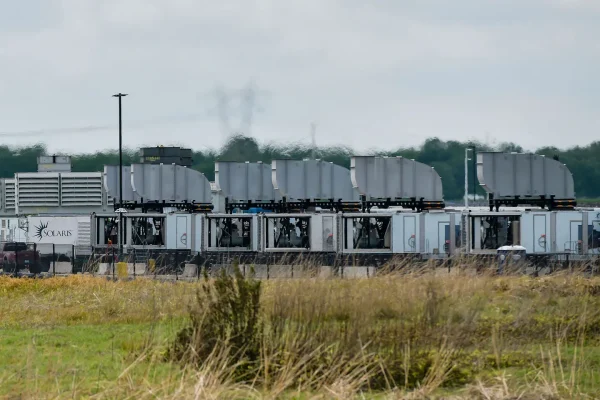
xAI and its funders, such as the Greater Memphis Chamber of Commerce, insisted the turbines were legal, generated negligible amounts of pollution, and were only temporary. They also claimed that the units would be replaced with cleaner models featuring pollution controls, a change they later claimed was carried out. That all happened in 2024, and so far only half of the turbines have been removed while they connect their facility to the power grid (which could raise a whole new load of problems).
But people who live in that area believe that the damage is already done, and that xAI’s approach sets a dangerous precedent for other companies to pollute without regulatory oversight, as long as they are doing so on a “temporary” basis.
This is a very valid belief because TIME had asked researchers at the University of Tennessee, Knoxville, to run an analysis on the air quality in South Memphis over the last couple of years, based on public satellite data from NASA and the European Space Agency.
The researchers found that the average concentrations of nitrogen dioxide has increased by 3% when comparing the periods before June 2024 and afterward. They also found that peak nitrogen dioxide concentration levels have increased by 79% from pre xAI levels in areas immediately surrounding the data center, and by 9% in nearby Boxtown.
The EPA writes that a high concentration of NO2 can aggravate respiratory diseases, particularly asthma. And as the American Lung Association says, “Black individuals in America are nearly 1.5 times more likely than other races and ethnicities to be diagnosed with asthma in their lifetime. In addition, they are also more likely to experience complications; including five times more likely to visit an emergency department because of asthma, and three times more likely to die from an asthma related problem.” I mention this because of the fact that Elon Musk’s asthma inducing data center wasting space in a predominantly black neighborhood.
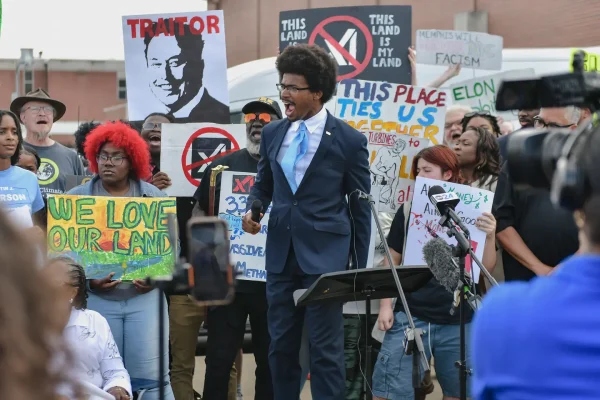
AI data centers are exploding in number across the country alongside Trump’s AI Action Plan, released in July, which calls for the expediting of data center permitting by reducing regulations imposed by the Clean Air Act and the Clean Water Act.
But AI is so wonderful…
If you ignore the environmental and societal harm that comes from generative AI use, there are… some benefits to it. Ivan Pohrebnivak, someone well versed with incorporating AI in the workplace says that, “One of the most significant generative AI benefits is its ability to reduce operational costs and save time. By automating repetitive tasks, companies can reallocate resources to more critical areas.”
On a surface level basis, there isn’t much fault with that type of thinking. It’s not a horribly bad thing for some companies to want to save costs – especially small business owners who are already struggling to make money in this economy as it is. But for bigger companies who already have all the money in the world, it just doesn’t make sense why they wouldn’t hire actual people.
In the current job crisis that is seeming to permeate America, these bigger companies should be doing what they can to create more jobs- not replace them with artificial intelligence.
Some companies are however taking (little) accountability for what their data centers are doing though. Meta released a Sustainability-Report in 2024 to say what they were doing in terms of protecting people and the environment, but a simple read through of it shows that they are doing a whole lot of “Here is what we want to happen in the near (2030) future” and not a lot of “Here is some evidence that shows we are ethically using water sources and protecting the planet right now.”
It is important to mention the fact that there are eco – (ish) – friendly versions of AI if you absolutely MUST use it. For instance, there is one form of AI, GreenPT (that you must pay to use) that claims it, “runs entirely on renewable energy, and we use heat recovery systems to reuse server heat for community heating. While the initial training of the models wasn’t performed on green servers, our hosting and inference operations are 100% sustainable.”
Unlike other AI companies, this one acknowledges that they are not 100% eco-friendly while also trying to work to be more eco-friendly. Some other AI websites that follow along this same path of wanting to be eco-friendly (but still not 100%) are Viro and Ecosia AI.
It’s easy to think that you only using AI every now and then has little impact, but when hundreds of millions of people all over the world hold that same opinion, the impact doesn’t become so little.
Do not fret, there is (some) hope.
It may seem like stopping these data centers is impossible – they are after all run by billion-dollar corporations. But the solution to this problem is actually not as difficult as it seems.
The best (and obvious) way to stop these data centers being built is to have everyone stop using generative AI platforms (like ChatGPT) and protest the building of data centers by educating people about the negative impacts of them. Some great examples of data centers being prevented from being built is in South American countries like Chile.
In the town of Cerrillos, an area in Santiago Chile, Google had made it clear that they were planning on putting a
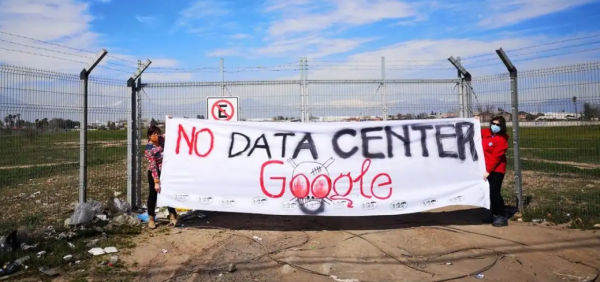
data center in the town – and at first the community was happy with the news as they thought it would be a good opportunity for some of their people to acquire jobs. But after local activists started making the people aware of the fact that this new data center would have required 169 liters (44.7 gallons) of water per second – water that they didn’t have as they were coming up on their 10th year of a drought – they were able to successfully start pushing back against the data center being built. So, google moved on from them and tried to build their data center in Uruguay (which they were also not successful at).
This example shows that when a community comes together to fight against these companies, change can happen. Another way is to start looking into government officials in your area that are pushing towards stopping AI expansion – you can bring awareness to them and their cause and get people out to vote for them.
As of right now, Generative AI has barely touched the surface of what it will do to us, but soon it will get to a point where it won’t matter how much the public tries to protest, companies will not listen. Because why would they listen to a couple broke farmers and dead fish when they have billionaires practically shoving money down their throats?