
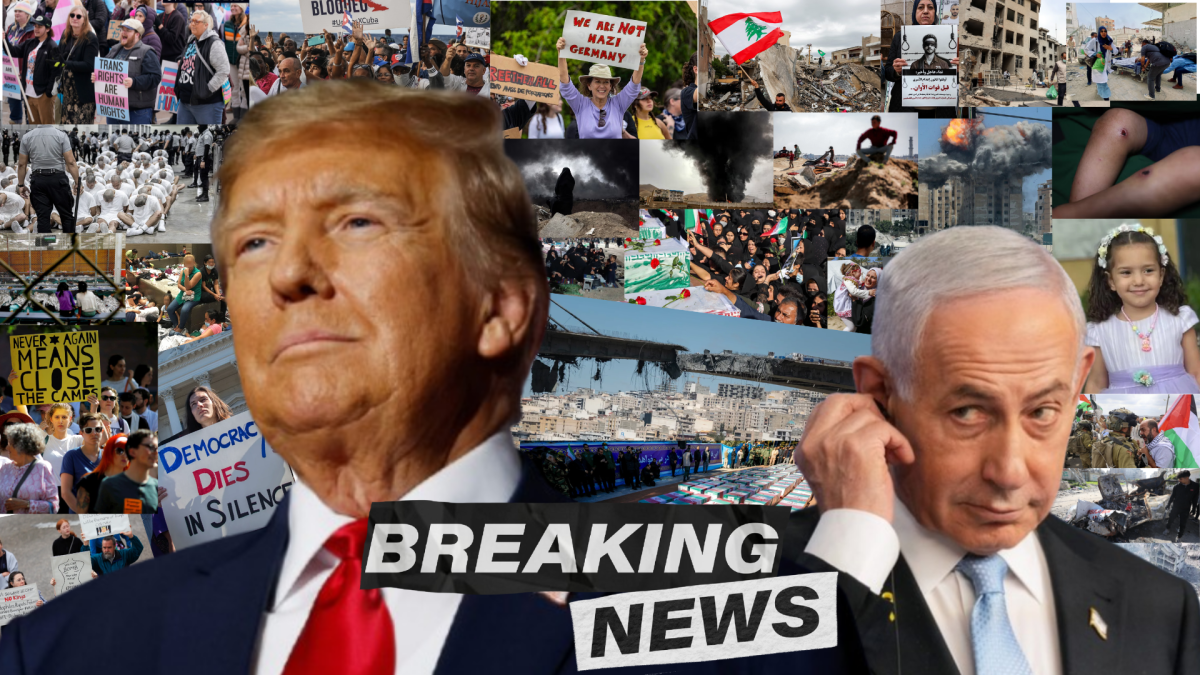















How did you enjoy your spring break? Because while you were going on vacation, relaxing at home, or maybe even just working, the United States was busy killing people, starting wars, silencing protest, and taking even more rights away from the people of this great nation. I don’t say this to make you feel bad, truly. I say this to help you as an American recognize your privilege, as that is not something we are taught to do.
The first step in recognizing your privilege as an American, is to understand how you are able to choose whether or not you want to tune into the news. Not that long ago, in order to get the news, people used to have to turn on the radio, pick up a newspaper, or tune in to the nightly program at 6 pm. But nowadays news is accessible 24/7, through the internet and social media.
I get that constantly exposing yourself to the everyday tragedies of the world is not great for your mental health, and as a previous writer for the Paw Print Dylan Vaughn wrote in his article, “Misinformation is prevalent all over the news making it difficult to tell fiction from fact.”
Despite this we have an responsibility to work towards educating ourselves about what is happening. I understand that it can be difficult to care about things that don’t seem to directly affect you, but the sooner you escape from the “not my country not my problem” mindset the sooner you can see how just, paying attention to the news can change the trajectory of what happens in this country.
Do you know what’s happening in Cuba?
South of the US in the crystal blue waters of the Caribbean Sea, the small island of Cuba lays dark, as it is being deliberately strangled by the United States government.
You may have heard of the country of Cuba in reference to how poor they are, or how communism has ruined their country, or maybe just their pretty vintage cars. But what you may be unaware of is what they are experiencing at the hands of the US. I speak about Cuba here because I, like many Americans, was unaware of what our country was doing to theirs. I was only recently made aware two months ago by a political commentator named Hasan Piker.
Some Brief History
Before the arrival of Christopher Columbus, the island of Cuba was inhabited by various Native Americans, but after his landing, Spain conquered Cuba and appointed Spanish governors to rule in Havana, Cubas capital city. In 1762–63, Havana was briefly occupied by Britain, before being returned to Spain in exchange for Florida.
A series of rebellions between 1868 and 1898, led by General Máximo Gómez, failed to end Spanish rule and claimed the lives of 49,000 Cuban guerrillas and 126,000 Spanish soldiers. However, the Spanish–American War resulted in a Spanish withdrawal from the island in 1898, and following three and a half years of ensuing US military rule, Cuba gained its independence in 1902.
In the years following its independence, the Cuban republic saw significant economic development, but also political corruption and a succession of authoritarian leaders, which lead to the overthrow of the dictator Fulgencio Batista by the 26th of July Movement, led by Fidel Castro, during the 1953–1959 Cuban Revolution.
The new government aligned with the Soviet Union and embraced communism. During the Cold War, Cuba supported Soviet policy in Afghanistan, Poland, Angola, Ethiopia, Nicaragua, and El Salvador. This support made it so that the Cuban economy was mostly supported by Soviet subsidies.
With the dissolution of the USSR in 1991 Cuba was plunged into a severe economic crisis known as the Special Period that ended in 2000 when Venezuela began providing Cuba with subsidized oil. The country has been politically and economically isolated by the United States since the Revolution, but has gradually gained access to foreign commerce and travel as efforts to normalize diplomatic relations have progressed. Domestic economic reforms are also beginning to tackle existing economic problems which arose in the aftermath of the special period (i.e. the introduction of the dual currency system).
The Flotilla
As established, Cuba received its oil from Mexico and Cuba. But in January 2026, the United States invaded Venezuela, which forcefully interrupted oil trade. To further worsen the situation Mexico was threatened with tariffs if they were to continue sending oil to Cuba.
The United States also begun blocking oil tankers heading to Cuba, targeting companies such as the Mexican state-owned Pemex. This effort seems to have been tied to ambitions of the Administration to bring about a regime change in Cuba by the end of 2026. “There’s an embargo. There’s no oil. There’s no money. There’s no anything,” Trump bragged aboard Air Force One on 16 February.
Some of the impacts of these new policy’s include blackouts, lack of fuel for aircraft and collection trucks, and food as well as humanitarian aid shortages reported by the United Nations Human Rights Office, which stated the current situation created obstacles to its UN World Food Programme relief efforts initiated following Hurricane Melissa and also local food sovereignty.
Mauricio Torres and Michael Rios at CNN report, “The shortage is also affecting water supply, according to Antonio Rodríguez Rodríguez, president of the National Institute of Hydraulic Resources (INRH). The official said last week that the institution is seeking measures to minimize disruption to distribution, such as installing solar panels to reduce dependence on the electrical grid.”
The consequences of the US siege are lethal, for newborns and parents, for the elderly and the sick. The Latin Times writes, “Cuban doctors claim that medical patients are beginning to die as conditions in the island deteriorate due to continued lack of fuel from the ongoing U.S. blockade, according to a new report. Six doctors who spoke to The New York Times said conditions at hospitals and clinics across the country are leading to otherwise preventable deaths.”
“Intensive care units and emergency rooms are compromised, as are the production, delivery, and storage of medicines,” warned the UN High Commission for Human Rights.
To help combat this American made issue, a maritime convoy plan to deliver aid to Cuba was created and called The Nuestra América Convoy (Our America Convoy) and is an international humanitarian movement. Organizers behind the coalition named the convoy after an essay by the Cuban writer and philosopher José Martí.
The initiative was originally planned to be a flotilla, before being expanded into a global coordinated mission to deliver humanitarian supplies by air, land, and sea, and converged in Havana on 21 March 2026. The convoy delivered approximately 20 tons of aid.
On March 20th, 2026, the flotilla had already left for Cuba from Mexico, boarding with “hundred solar panels, essential for homes and schools, as well as about 50 tons of goods including rice, oats, beans and medicines already stowed”, vowing to pass through Mexican and Cuban national waters and to avoid US owned ones. The crew was mostly made up of people from Mexico and North and Southern Americans, as well as Europeans, most notably Italians tied to various pro-Cuban organizations (Such as “Agenzia Interscambio Culturale ed Economico con Cuba” and “Camalli”).
Participants on the convoy consist of 650 delegates from 33 countries and 120 organizations. Participants who traveled on the convoy include Jeremy Corbyn, Clara López, Pablo Iglesias, Chris Smalls, Thiago Ávila, Hasan Piker, Medea Benjamin, and Kneecap.
20 United States citizens who took part in the convoy as part of the Code Pink delegation were detained and interrogated by Customs and Border Protection after returning to the United States. 18 of the people had electronic devices seized.
Cuba and their help of others
A big reason why this blockade against Cuba is so disappointing is because of all the help that Cuba has provided to other countries. As they have done in past, Cuba continues to provide significant humanitarian assistance to the Latin American region, especially in the aftermath of natural disasters and for basic public health needs and education.
Zocalo Public Square talks about the ties between Cuba and Iran saying, “Cooperation in science and biotech expanded, prompting the Bush administration to unsuccessfully argue that Cuba had the intention of exporting bioweapons to a rogue regime. Joint ventures and cooperation have expanded, with Cuba selling vaccines, medical services, and medical training to Iran, while Iran in exchange has provided Cuba with a modest line of credit for trade. The two countries have found common cause in their fight against American imperialism and aggression at the UN and most recently in 2006, when President Mahmoud Ahmadinejad attended the Non-Aligned Movement’s summit in Havana.”
Although Cuba had previously dispatched combat detachments to Algeria (1963) and Syria (1973) as tokens of support, they were small and quickly withdrawn after the end of hostilities. By contrast, the Cuban expeditionary missions to Angola and Ethiopia were not only larger in size, better armed, but also better coordinated with the USSR for cooperative intervention. They were a mission-oriented contingent and stayed for almost 14 years in Africa before their phased withdrawal starting in early 1989. (Cuban Assistance Programmes in Africa: A historical narrative – Pakistan Monthly Review)
Despite the United Stats’s callousness towards Cuba, they have still worked towards helping others in their time of need.
The first time that Cuba provided medical aid happened in 1960 when a massive earthquake hit Chile and killed around 5,000 people. Cuba decided to help out by sending their healthcare workers into the aftermath. In 1998, two major hurricanes, Georges and Mitch, had ravaged many tropical islands and Latin American countries, causing widespread destruction. Cuba’s leaders saw this as another chance to prove Cuba’s humanitarian efforts and again provided their healthcare workers.
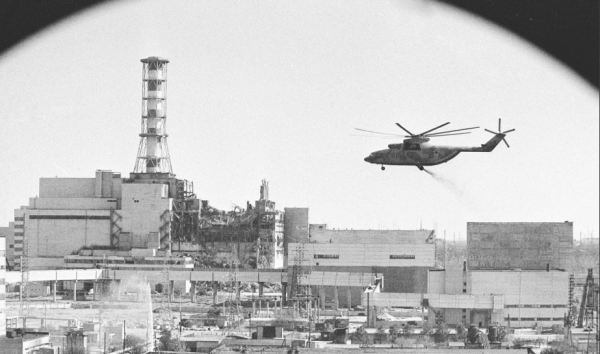
(Igor Kostin, Sputnik Images)
The first medical assistance project abroad that didn’t involve disaster relief was in support of Algeria after the country gained independence from France in 1963. Rufina Kaloyanova who writes for Love Cuba says, “Most of Algeria’s doctors had returned to Europe after the war, leaving this country with a massive lack of proper healthcare professionals, along with many wounded soldiers and citizens. Castro sent doctors and medical supplies to Algeria, which proved helpful as Algeria’s first president visited Cuba in 1962 to profess his gratitude to the island nation.”
Another crisis in which Cuba provided aid was the Chornobyl nuclear accident in Ukraine. Victims of the disaster are still suffering to this day, as the radioactive and mental health effects have been long-term consequence. Cuba offered help to minimize these problems by starting the ‘Chornobyl Children’ program at the Tarara pediatric hospital in 1990.
This program promised to provide free, comprehensive medical care for kids aged 5 to 15 who were affected by the disaster. Doreen Weppler-Grogan wrote about this for the Guardian, saying, “Following the catastrophe, the tiny island of Cuba stepped forward and cared for over 20,000 young cancer victims from 1989 to 2011, – medical care, schooling, clothing, food, accommodation, playgrounds – all free of charge. A specialized medical facility was opened to the east of Havana, and Cuban doctors travelled to the affected region to treat patients in their homeland.”
Chernobyl, Cuba’s voluntary response to the Ebola crisis in West Africa, and ELAM (a program that Cuba funds is the Latin American Medical School; a post-secondary school that offers many scholarships to low-income students from all over the world. It requires that international students return to their home countries after graduating to work in health care, this way, Cuba can help developing countries grow their medical staff without sending out all of their own doctors and nurses) are all proof of Cubas socialist ideology, which elevates healthcare as a human right, something that the United States has no business taking away.
What is (Still) happening in Palestine?
The name Palestine is most likely one that you have heard quite a bit these past couple years, either from protest happening in your area, the news, or a slight comment from family member. I will admit, my knowledge of Palestine started on October 7th, 2023 (which I will discuss in a later section), as before then I had never even heard of it.
After the attacks of October 7th, we were told by our government/news that what happened was completely unexpected and that Isreal and its people have a right to the land and that the people of Palestine were completely unjustified in their attack.
Instead of completely believing whatever I was told like a lot of Americans did, I decided to educate myself a little. Both about what led up to that day, and what has happened since. This section is going to be a little longer than the others as this is a topic that I have a lot of emotions for; emotions that I have had trouble expressing. In the first year of Palestine’s presence in American thought, whenever the topic of what happened was brought up, I would try to offer explanation and try to make people understand, but it would always be shut down with a “well Isreal is in the Jewish bible so therefore Israel has a right to keep doing what’s it’s been doing” which, if these people were not completely serious when saying this, would be 10/10 rage bait no notes.
Now saying all that, I do not condone the murders/ sexual violence that took place on October 7th, and I am not Anti-semitic. Read my words dear reader, I do not hate Jewish people, I believe the Holocaust happened, and I do not hate Jewish people. Thank you.
To clarify before I get into this, I’m not going to get into all the Israel conspiracies as I do not think this article is a place to discuss that topic along with the fact that I believe a good chunk of those theories are rooted in antisemitism. I just want to educate you about this live streamed Holocaust happening with the help of the United States.
A not so brief history of Palestine
I would like to preface first and foremost, I am not going to talk about every single war and handing over of power that has happened in Palestine, and I will not discuss every civilization that has lived in the land where Palestine is. This is not because I want to leave out big parts of history, but simply because the documented recordings of Palestine go back really far. For example, some of the ancient powers that have resided in this country are the Canaanites, Egyptians, Israelites, Philistines, Assyrians, Babylonians, Persians, Greeks, Romans, Byzantines, Arab Caliphates, Crusaders, Mamluks, Ottomans, and of course, the British.
But starting off a little later in its history, in 66 CE, the First Jewish–Roman War, also known as the Great Jewish Revolt, erupted. The war lasted for four years and was defeated by the Roman emperors Vespasian and Titus. In 70 CE, the Romans captured the city of Jerusalem and destroyed both the city and the Second Temple. The events were described by the Jewish historian Josephus, who wrote that 1,100,000 Jews perished during the revolt, while a further 97,000 were taken captive.
In 132 CE, a second uprising, the Bar Kokhba revolt erupted and took three years to put down. It suffered massive costs on both sides and saw a major shift in the population of Palestine. The scale of the overall destruction is described by Dio Cassius’s Roman History (a guy who wrote about almost the entirety of Roman history), where he wrote that Roman war operations in the country had left some 580,000 Jews dead, with many more dying of hunger and disease, while 50 of their most important outposts and 985 of their most famous villages were razed to the ground. According to Cassius, “nearly the whole of Judaea was made desolate”. During this time is when Jews were barred from entering Jerusalem.
The 4th century started off quite badly for the Christians as it began with an intense persecution of them but ended with Christianity becoming the Roman state church. This transformation of the Roman Empire was spearheaded by Rome’s first Christian emperor Constantine the Great. He had ascended the throne by defeating his competitors in a series of civil wars to which he credited his victories to Christianity.
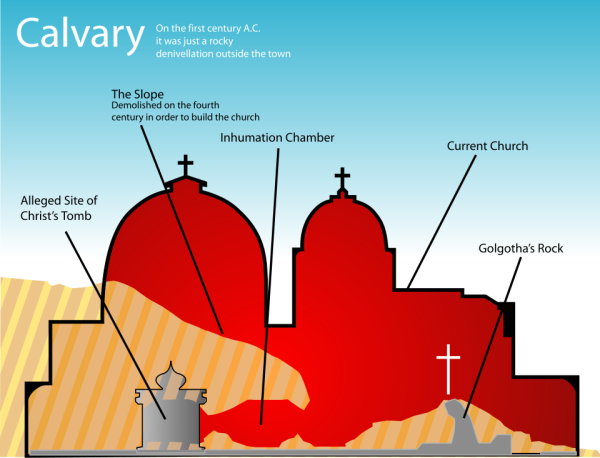
Rome’s Christianization had a profound impact on Palestine. Churches were built on sites revered by Christians such as the Church of the Holy Sepulchre in Jerusalem where Jesus was thought to have been crucified and buried, and the Church of the Nativity in Bethlehem where he was thought to have been born (which I still don’t really understand why exactly they would put buildings on top of spots that are supposedly sacred). Of the over 140 Christian monasteries built in Palestine in this period, some are among the oldest in the world, including Mar Saba, which is still in use to this day, Saint George’s Monastery in Wadi Qelt, and the Monastery of the Temptation near Jericho.
In 602, the final war between the Byzantine Empire and its eastern rival the Persian Empire (Sasanid Empire) broke out. In 613 the Persians invaded the Levant and the Jews revolted against the Byzantines, hoping to secure autonomy for Jerusalem. The following year Persian-Jewish forces captured Caesarea and Jerusalem, destroying its churches, massacring its Christian population, and taking the True Cross and other relics as trophies. The Roman emperor Heraclius made a successful counter-offensive and by 627(8) he made his way into Persia.
The Persians ended up having to return the Roman provinces they had captured and the stolen relics. In March 629, Heraclius returned the True Cross to Jerusalem and had promised the Jews pardon for their earlier treachery- however the Christians had not forgotten what the Jewish people had done, and at their insistence, Heraclius expelled the Jews from Jerusalem and had those involved in the uprising executed.
Between 636 and 640, the Muslim armies of the second Islamic caliph Umar conquered Palestine. Under Islamic rule, Christians, Jews and Samaritans were protected as fellow Abrahamic monotheists or “peoples of the Book” and allowed to practice their religions in peace. The Muslims also lifted the Romans’ centuries-long ban on Jews in Jerusalem.
Though Palestine was now under Muslim control, the Christian world’s affection for the Holy Land continued to grow. Christian kings made generous donations to Jerusalem’s holy sites, and helped facilitate the increasing pilgrimage traffic. Many pilgrims were attacked by highwaymen which would later be cited by the Crusaders as a reason to “liberate” Jerusalem from the Muslims.
Many things happened in the hundreds of years after that like civil wars, changes in leadership that lead to Jewish suppression, and the destruction of many important churches, and in the 11th century, the Muslim Turkic Seljuk Empire invaded West Asia and both the Byzantines and the caliphates (who at the time had claim over Palestine) suffered territorial losses. Baghad fell in 1055, and Palestine in 1071–1073. This caused the period of relative calm to end, and Palestine again became the scene of anarchy, internal wars among the Turks themselves and between their enemies. In 1077, an uprising against Seljuk’s rule (whom were very unpopular) spread in Palestine which was promptly squashed. The Seljuks slaughtered the people of Jerusalem, despite having promised them pardon, and annihilated Gaza, Ramla, and Jaffa. In 1098, the Fatimids recaptured Jerusalem from the Seljuks.
Again, many more things happened like the Crusade period and the Ottoman period– which I will not talk about since it is so very long and extensive, though if you want to know a little bit about what happened the link (this link too) I added goes into it a bit if that’s something that genuinely interest you.
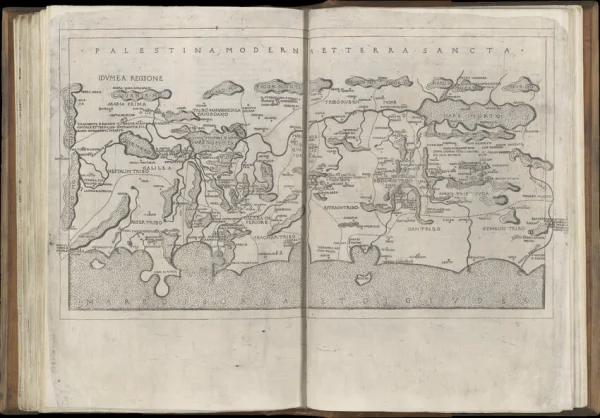
The end of the Ottoman control over Palestine was seen following the First World War and the occupation of the region by the British. Great Britain oversaw Palestine on behalf of the League of Nations between 1920 and 1948, a period referred to as the “British Mandate”.
This caused – to put it lightly – a whole lot of tension between the Arabs and Jews living there as the British oversaw essentially splitting the land into different territories.
In April 1920, the Allied Supreme Council (the United States, Great Britain, France, Italy and Japan) met at Sanremo and formal decisions were taken on the allocation of mandate territories. The United Kingdom obtained a mandate for Palestine and France obtained a mandate for Syria. The boundaries of the mandates and the conditions under which they were to be held were not decided.
On 24 July 1922, the League of Nations approved the terms of the British Mandate over Palestine and Transjordan. On 16 September the League formally approved a memorandum from Lord Balfour confirming the exemption of Transjordan from the clauses of the mandate concerning the creation of a Jewish national home and Jewish settlement.
The British facilitated Zionist settlement of Palestine by at least initially upholding their commitment under the Mandate to facilitate Jewish mass immigration. The latter was a factor in alarming the Arabs. In the census conducted in 1922 the population of Palestine was 763,550 of which 89 percent were Arabs and 11 percent Jews.
In 1933, Adolf Hitler came to power in Germany, and the Haavara agreement between the Zionist Federation and the Third Reich was to facilitate the emigration of German Jews. In 1935, 62,000 Jews entered Palestine, the highest number since the mandate began in 1920.
Between 1922 and 1947, the annual growth rate of the Jewish sector of the economy was 13.2%, mainly due to immigration and foreign capital, while that of the Arab was 6.5%. Per capita, these figures were 4.8% and 3.6% respectively. By 1936, the Jewish sector had eclipsed the Arab one, and Jewish individuals earned 2.6 times as much as Arabs (CITE). In terms of human capital, there was a huge difference. For instance, the literacy rates in 1932 were 86% for the Jews against 22% for the Arabs, although Arab literacy was steadily increasing. Palestine continued to develop economically during World War II, with increased industrial and agricultural outputs and the period was considered an “economic Boom”. In terms of Arab-Jewish relations, these were relatively quiet times.
Starting in 1939 and throughout World War II, Britain reduced the number of Jewish immigrants allowed into Palestine, following the publication of the White Paper of 1939. Once the 15,000 annual quota was exceeded, Jews fleeing Nazi persecution were placed in detention camps or deported to places such as Mauritius. The Anglo-American Committee of Inquiry’s findings published in 1946 divested the White Paper and caused Britain to ease restrictions on Jewish immigration to Palestine.
In 1937, the Peel Commission recommended dividing Palestine into a Jewish and an Arab state. The Jews would receive Tel Aviv, the coastal plain, the northern valleys, and parts of the Galilee, while the Arabs would receive the West Bank of the river Jordan, central Palestine and the southern desert. Britain would retain Jerusalem and a narrow corridor linking it to the sea.[476] Importantly, the commission envisaged a population exchange similar to the exchanges between Turkey and Greece in the 1920s; thousands of Arabs who had their homes within the territory of the Jewish state would be forcibly removed.
The Zionist leadership supported partition in principle but expressed reservations about the commission’s findings and some opponents thought that the territory allotted to the Jewish state was too small. Ben-Gurion saw it as the first step in a plan to gradually claim the entire country on both sides of Jordan. He was especially pleased with the commission’s recommendation of forced population transfer; a “really Jewish” state is about to become reality, he wrote in his diary.
The Palestinians led by the mufti opposed dividing Palestine, but a minority, led by the Nashashibis, supported it. This led to animosity between Husayni’s and Nashashibi’s supporters as the former accused the latter of treason.
After World War II, Britain’s control over Palestine became increasingly shaky. This was caused by a combination of factors, a big one being the costs of maintaining an army of over 100,000 men in Palestine was quite costly for the British economy that was suffering from post-war depression.
On 29 November 1947, the United Nations General Assembly, voting 33 to 13 in favor with 10 abstentions, adopted Resolution 181 (II) (though not legally binding)[496] recommending a partition with the Economic Union of Mandatory Palestine to follow the termination of the British Mandate. The plan was to partition Palestine into an “Independent Arab state alongside a Jewish States, and the Special International Regime for the City of Jerusalem“. Jerusalem was to encompass Bethlehem. Zionist leaders (including the Jewish Agency for Israel), accepted the plan, while Palestinian Arab leaders rejected it and all independent Muslim and Arab states voted against it
The UN resolution was the catalyst for a full scale civil war. This was something now refereed to as the Nakba, which as the United Nations describes, “In November 1947, the UN General Assembly passed a resolution partitioning Palestine into two states, one Jewish and one Arab, with Jerusalem under a UN administration. The Arab world rejected the plan, arguing that it was unfair and violated the UN Charter. Jewish militias launched attacks against Palestinian villages, forcing thousands to flee. The situation escalated into a full-blown war in 1948, with the end of the British Mandate and the departure of British forces, the declaration of independence of the State of Israel and the entry of neighbouring Arab armies. The newly established Israeli forces launched a major offensive. The result of the war was the permanent displacement of more than half of the Palestinian population.
As early as December 1948, the UN General Assembly called for refugee return, property restitution and compensation (resolution 194 (II)). However, 75 years later, despite countless UN resolutions, the rights of the Palestinians continue to be denied. According to the UN Relief and Works Agency for Palestine Refugees (UNRWA) more than 5 million Palestine refugees are scattered throughout the Middle East. Today, Palestinians continue to be dispossessed and displaced by Israeli settlements, evictions, land confiscation and home demolitions.”
The All-Palestine Government was established by the Arab League on 22 September 1948, during the 1948 Arab–Israeli War. The Palestinian National Council convened in Gaza City and declared the independence of Palestine on 1 October 1948. It was soon recognized by all Arab League members, except Jordan. Though jurisdiction of the Government was declared to cover the whole of the former Mandatory Palestine with Jerusalem as its capital, its effective jurisdiction was limited to the Gaza Strip.[508] The Prime Minister of the Gaza-seated administration was named Ahmed Hilmi Pasha, and the President was named Hajj Amin al-Husseini,[509] former chairman of the Arab Higher Committee.
During this time disputes over who should have what land followed and created multiple different wars., and from 1987 to 1993, the First Palestinian Intifada against Israel took place.
To solve this attempts at the Israeli–Palestinian peace process were made at the Madrid Conference of 1991. Following the 1993 Oslo Peace Accords between Palestinians and Israel (the “Oslo Accords”), which gave the Palestinians limited self-rule in some parts of the occupied territories through the Palestinian Authority, and other detailed negotiations, proposals for a Palestinian state gained momentum. They were soon followed in 1993 by the Israel–Jordan peace treaty.
Also in 2002, the Road map for peace calling for the resolution of the Israeli–Palestinian conflict was proposed by a “quartet”: the United States, European Union, Russia, and United Nations. U.S. president George W. Bush in a speech on 24 June 2002, called for an independent Palestinian state living side by side with Israel in peace.
Following Israel’s unilateral disengagement plan of 2004, it withdrew all settlers and most of the military presence from the Gaza strip, but maintained control of the air space and coast. Israel also dismantled four settlements in northern West Bank in September 2005.
On 25 January 2006, Palestinian legislative elections were held in order to elect the second Palestinian Legislative Council, the legislature of the Palestinian Authority (PA). Hamas won the election, securing 74 of the 132 seats while its rival Fatah only won 45 seats. The outcome of the election shocked the world and meant that Hamas would take over most of PA’s institutions.[521] Hamas tried to form a unity government with Fatah, but the offer was rebuffed. Meanwhile, Israel and the US imposed sanctions on the PA in order to destabilize the Palestinian government so that it would fail and new elections would be called. Those efforts were ultimately unsuccessful but lead to a rift between Hamas and Fatah.
In June 2006, Palestinian militants affiliated with Hamas carried out a cross-border raid from Gaza into Israel through a tunnel dug for the purpose of attacking Israel. An Israeli soldier, Gilad Shalit, was captured and taken to Gaza by the militants.[522] He would be held for five years until he was released in 2011 in exchange for over 1,000 Palestinian prisoners imprisoned by Israel.[523] The raid caused Israel to make several large-scale invasions of Gaza in the summer and autumn of 2006 attempting to rescue their captured soldier. Over 500 Palestinians and 11 Israelis were killed during the hostilities but ultimately they were unsuccessful in retrieving Shalit.[522]
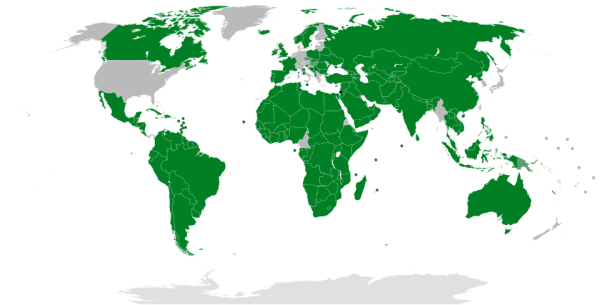
Green: Countries that recognize the State of Palestine
Grey: Countries that did not recognize the State of Palestine
In July 2012, it was reported that Hamas Government in Gaza was considering declaring the independence of the Gaza Strip with the help of Egypt. In August 2012, Foreign Minister of the PNA Riyad al-Malki told reporters in Ramallah that PNA would renew effort to upgrade the Palestinian (PLO) status to “full member state” at the U.N. General Assembly on 27 September 2012.[531] By September 2012, with their application for full membership stalled due to the inability of Security Council members to “make a unanimous recommendation”, Palestine had decided to pursue an upgrade in status from “observer entity” to “non-member observer state“.
On 27 November, it was announced that the appeal had been officially made, and would be put to a vote in the General Assembly on 29 November, where their status upgrade was expected to be supported by a majority of states. In addition to granting Palestine “non-member observer state status”, the draft resolution “expresses the hope that the Security Council will consider favourably the application submitted on 23 September 2011 by the State of Palestine for admission to full membership in the United Nations, endorses the two state solution based on the pre-1967 borders, and stresses the need for an immediate resumption of negotiations between the two parties”.
On 29 November 2012, in a 138–9 vote (with 41 abstaining), General Assembly resolution 67/19 passed, upgrading Palestine to “non-member observer state” status in the United Nations. The new status equates Palestine’s with that of the Holy See. The change in status was described by The Independent as “de facto recognition of the sovereign state of Palestine”.
This did not start on October 7th
So, if you invested a little bit of your time (which I won’t hold it against you if you didn’t) into reading the not so brief history of Palestine, then you can see that despite what our leaders want us to think this did not in fact start in 2023 on October 7th.
In this section I would just like to focus on some of the more iffy parts between Palestine and Isreal, like the multiple ceasefire arrangements that have been made both, before and after October 7th (and how they have been continuously broken).
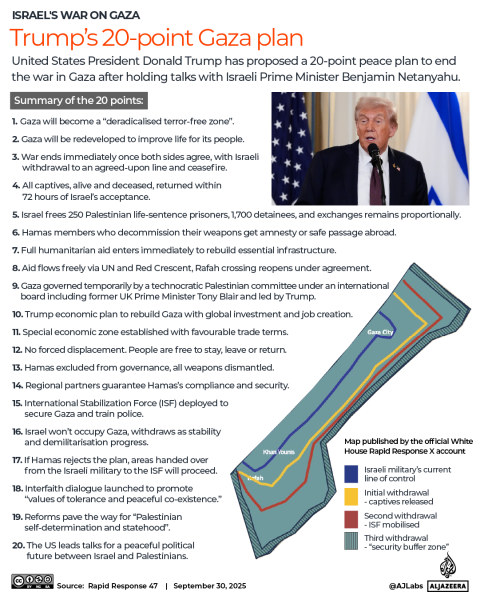
The most recent ceasefire agreement between Palestine and Isreal was created on September 29th, 2025, by the United States. The US unveiled a 20-point proposal to end Israel’s genocidal war on Gaza, release the remaining captives held in the enclave, allow the full entry of humanitarian aid into the besieged territory and outline a three-phase withdrawal of Israeli forces.
According to the Government Media Office in Gaza reports, Israel violated the ceasefire agreement at least 2,073 times from October 10, 2025 to March 18, 2026, through the continuation of attacks by air, artillery and direct shootings. Israel has pledged not to allow a Palestinian state, and the US has continued its large-scale arms transfers and diplomatic backing to Israel throughout its genocidal war on Gaza, while offering only vague statements about Gaza’s future.
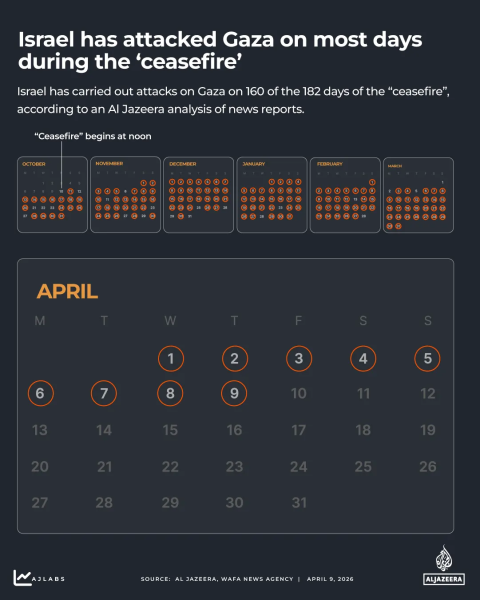
According to Al Jazeera, on October 29, Israel killed 109 people, including 52 children, after an exchange of gunfire in Rafah that killed one Israeli soldier. “The Israelis hit back, and they should hit back,” Trump told reporters, calling Israel’s attacks “retribution” for the soldier’s death. On November 22, at least 21 Palestinians were killed in a spate of Israeli drone and missile attacks throughout northern and central Gaza, with dozens of others wounded.
The latest figures from the Palestinian Ministry of Health in Gaza, tracking the casualties from October 7, 2023, through April 9, 2026:
Confirmed killed: at least 72,315 people, including 20,179 children
Injured: at least 172,137 people
According to the Gaza Government Media Office, since October 10, 2025 to March 18, 2026 only 38,358 trucks entered Gaza out of 94,800. That is only 40 percent of the trucks allocated. According to truck drivers, aid deliveries are facing significant delays, with Israeli inspections taking much longer than expected. In addition, Israel has blocked essential and nutritious food items, including meat, dairy, and vegetables, crucial for a balanced diet. Instead, non-nutritious foodstuffs are being allowed, such as snacks, chocolate, crisps, and soft drinks.
These are some past ceasefire agreements between the two:
2012 – On November 14, two days after Palestinian factions in Gaza agree to a truce following several days of violence, Israel assassinates the leader of Hamas’ military wing, Ahmed Jabari, threatening to escalate the violence once again after a week in which at least six Palestinian civilians are killed and dozens more wounded in Israeli attacks.
2012 – On March 9, Israel violates an Egyptian-brokered ceasefire and assassinates head of the Gaza-based Popular Resistance Committees, sparking another round of violence in which at least two dozen Palestinians are killed, including at least four civilians, and scores more wounded. As usual, Israel claims it is acting in self-defense, against an imminent attack being planned by the PRC, while providing no evidence to substantiate the allegation.
2011 – On October 29, Israel breaks a truce that has maintained calm for two months, killing five Islamic Jihad members in Gaza, including a senior commander. The following day, Egypt brokers another truce that Israel proceeds to immediately violate, killing another four IJ members. In the violence, a total of nine Palestinians and one Israeli are killed.
2008 – In November, Israel violates a ceasefire with Hamas and other Gaza-based militant groups that has been in place since June, launching an operation that kills six Hamas members. Militant groups respond by launching rockets into southern Israel, which Israel shortly thereafter uses to justify Operation Cast Lead, its devastating military assault on Gaza beginning on December 27. Over the next three weeks, the Israeli military kills approximately 1,400 Palestinians, most of them civilians, including more than 300 children. A UN Human Rights Council Fact Finding Mission led by South African jurist Richard Goldstone subsequently concludes that both Israel and Hamas had committed war crimes and crimes against humanity during the fighting, a judgment shared by human rights organizations such as Amnesty International and Human Rights Watch.
2002 – On July 23, hours before a widely reported ceasefire declared by Hamas and other Palestinian groups is scheduled to come into effect, Israel bombs an apartment building in the middle of the night in the densely populated Gaza Strip in order to assassinate Hamas leader Salah Shehada. Fourteen civilians, including nine children, are also killed in the attack, and 50 others wounded, leading to a scuttling of the ceasefire and a continuation of violence.
2002 – On January 14, Israel assassinates Raed Karmi, a militant leader in the Fatah party, following a ceasefire agreed to by all Palestinian militant groups the previous month, leading to its cancellation. Later in January, the first suicide bombing by the Fatah linked Al-Aqsa Martyr’s Brigade takes place.
2001 – On November 23, Israel assassinates senior Hamas militant, Mahmoud Abu Hanoud. At the time, Hamas was adhering to an agreement made with PLO head Yasser Arafat not to attack targets inside of Israel. Following the killing, respected Israeli military correspondent of the right-leaning Yediot Ahronot newspaper, Alex Fishman, writes in a front-page story: “We again find ourselves preparing with dread for a new mass terrorist attack within the Green Line [Israel’s pre-1967 border]… Whoever gave a green light to this act of liquidation knew full well that he is thereby shattering in one blow the gentleman’s agreement between Hamas and the Palestinian Authority; under that agreement, Hamas was to avoid in the near future suicide bombings inside the Green Line…” A week later, Hamas responds with bombings in Jerusalem and Haifa.
2001 – On July 25, as Israeli and Palestinian Authority security officials meet to shore up a six-week-old ceasefire, Israel assassinates a senior Hamas member in Nablus. Nine days later, Hamas responds with a suicide bombing in a Jerusalem pizzeria.
1988 – In April, Israel assassinates senior PLO leader Khalil al-Wazir in Tunisia, even as the Reagan administration is trying to organize an international conference to broker peace between Israelis and Palestinians. The US State Department condemns the murder as an “act of political assassination.” In ensuing protests in the occupied territories, a further seven Palestinians are gunned down by Israeli forces.
1982 – Following Israel’s invasion of Lebanon in June, and after PLO fighters depart Beirut under the terms of a US-brokered ceasefire, Israel violates the terms of the agreement and moves its armed forces into the western part of the city, where the Palestinian refugee camps of Sabra and Shatila are located. Shortly thereafter, Israeli soldiers surround the camps and send in their local Christian Phalangist allies – even though the long and bloody history between Palestinians and Phalangists in Lebanon is well known to the Israelis, and despite the fact that the Phalangists’ leader, Bashir Gemayel, has just been assassinated and Palestinians are rumored (incorrectly) to be responsible. Over the next three days, between 800 and 3,500 Palestinian refugees, mostly women and children left behind by the PLO fighters, are butchered by the Phalangists as Israeli soldiers look on. In the wake of the massacre, an Israeli commission of inquiry, the Kahan Commission, deems that Israeli Defense Minister (and future Prime Minister) Ariel Sharon bears “personal responsibility” for the slaughter.
1981-2 – Under Defense Minister Ariel Sharon, Israel repeatedly violates a nine-month-old UN-brokered ceasefire with the PLO in Lebanon in an effort to provoke a response that will justify a large-scale invasion of the country that Sharon has been long planning. When PLO restraint fails to provide Sharon with an adequate pretext, he uses the attempted assassination of Israel’s ambassador to England to justify a massive invasion aimed at destroying the PLO – despite the fact that Israeli intelligence officials believe the PLO has nothing to do with the assassination attempt. In the ensuing invasion, more than 17,000 Lebanese are killed.
1973 – Following a ceasefire agreement arranged by the US and the Soviet Union to end the Yom Kippur War, Israel violates the agreement with a “green light” from US Secretary of State Henry Kissinger. According to declassified US documents Kissinger tells the Israelis they can take a “slightly longer” time to adhere to the truce. As a result, Israel launches an attack and surrounds the Egyptian Third Army, causing a major diplomatic crisis between the US and Soviets that pushes the two superpowers to the brink of nuclear war, with the Soviets threatening to intervene to save their Egyptian allies and the US issuing a Defcon III nuclear alert.
1967 – Israel violates the 1949 Armistice Agreement, launching a surprise attack against Egypt and Syria. Despite claims Israel is acting in self-defense against an impending attack from Egypt, Israeli leaders are well aware that Egypt poses no serious threat. Yitzhak Rabin, Chief of the General Staff of the Israeli army during the war, says in a 1968 interview that “I do not believe that Nasser wanted war. The two divisions he sent into Sinai on May 14 would not have been enough to unleash an offensive against Israel. He knew it and we knew it.” And former Prime Minister Menachem Begin later admits that “Egyptian army concentrations in the Sinai approaches did not prove that Nasser was really about to attack us. We must be honest with ourselves. We decided to attack him.”
1956 – Colluding with Britain and France, Israel violates the 1949 Armistice Agreement by invading Egypt and occupying the Sinai Peninsula. Israel only agrees to withdraw following pressure from US President Dwight Eisenhower.
1949 – Immediately after the UN-brokered Armistice Agreement between Israel and its neighbors goes into effect, the armed forces of the newly-created Israeli state begin violating the truce with encroachments into designated demilitarized zones and military attacks that claim numerous civilian casualties.
___
I do not condone the actions of Hamas, and I find some of what they’ve done to be irreprehensible. However, for just a second, I would like for you to imagine yourself in one of their situations.
For instance, imagine some guy coming up to your house and kicking you out, saying that he is the rightful owner of your home without any physical proof. You, having no other choice, comply and are relocated to an area filled with hundreds of other people just like you. Then, out of nowhere, a barrage of missiles is dumped on your head for no apparent reason killing your partner, your children, your parents, your siblings, and/or your pet.
You somehow are the only one to survive and have essentially nothing. Tell me, if you were in this situation would you too not join a force that says it will bring harm to the people that just ruined your life? Or would you just show your belly and accept defeat.
As Lucy Williamson for the BBC put it so well, “The Palestinian Authority realized that targeting Hamas would not eradicate it because it’s an ideological movement rooted within the Palestinian people…”
Do you know what’s happening in Iran?
If you have been paying even the littlest bit of attention to the news, then you may have heard that the United States is at war with Iran. Other than the fact that calling what we are doing to them “war” when it is more like acts of termism, I would just like to clear up a few things about what is happening- especially since it’s a whole lot more than rising gas prices.
How to actually pronounce it
You may have been hearing our president and people close to him pronouncing the country of Iran as EYE-ran. This may not seem like much of a big deal, however, it is. Iran is pronounced ih-rahn (an easy way to think about this is ih sounding like see without the s, and rahn as sounding like gone without the g). Unless you have a speech impediment it’s not that hard to pronounce correctly. I’m not saying that the everyday American should be pronouncing these countries names with perfect accuracy, but I do believe that high ranking officials who are decimating places like Iran should at least have the decency to say it right.
Though saying this, it must be acknowledged that they are most likely Incorrectly pronouncing Iran on purpose. As explained by Valerie M. Fridland for the Independent, “A linguist explains that subtle differences in vowel pronunciation can reveal a speaker‘s political ideology and social identity…During the Iraq War, a study found that a politician‘s party affiliation and war stance predicted their pronunciation of ‘Iraq,’ with Republicans favoring an anglicized ‘ear-RACK’ and Democrats a more native-like ‘ear-ROCK.’” Fridland explains how the Republican way of pronunciation was connected to favoring more troops.
As can be assumed, this pattern of speech does not exempt Iran when it comes to politicians like Donald Trump and JD Vance pronouncing its name, which Fridland suggest is to potentially to underscore a ‘pro-America’ focus.
A somewhat brief history
Iran (also known as Persia among many of the people who live there) has an incredibly extensive history, as it was a dominant force throughout the world as early as 678 BC. The Islamic Republic of Iran that we know today had its current constitution drafted in 1979. This means Iran is as old as 2600 years, or as young as 43 years old.
Iran is intertwined with Greater Iran, which is a region encompassing all of the areas that have witnessed significant settlement or influence by the Iranian peoples and the Iranian languages.. Central to this region is the Iranian plateau, now covered by modern Iran. It also has connections with the histories of many other major civilizations, such as India, China, Greece, Rome, and Egypt.
I’m going to skip though a lot of the ancient history, and just focus more on the more modern history of Iran, however if you would like to learn about Iran’s ancient history click this link.
The Iranian Revolution, also known as the Islamic Revolution, was the revolution that transformed Iran from an absolute monarchy under Shah Mohammad Reza Pahlavi to an Islamic republic under Ayatollah Ruhollah Khomeini, one of the leaders of the revolution and founder of the Islamic Republic. This is all said to have begun in January of 1978 with the first major demonstrations, and concluded with the approval of the new Constitution that made Ayatollah Khomeini became Supreme Leader of the country in December 1979.
While this was happening, Mohammad Reza Pahlavi left the country for exile in January 1979 after strikes and demonstrations paralyzed the country, and on 1 February 1979, Ayatollah Khomeini returned to Tehran. The final collapse of the Pahlavi dynasty occurred shortly after on 11 February when Iran’s military declared itself “neutral” after guerrillas and rebel troops overwhelmed troops loyal to the Shah in armed street fighting. Iran officially became an Islamic Republic on 1 April 1979, after Iranians overwhelmingly approved a national referendum to make it so a day before.
On 28 July 2024, Masoud Pezeshkian was formally endorsed as Iran’s new president by Iran’s supreme leader, Ayatollah Ali Khamenei. Pezeshkian, a reformist, won in a presidential election runoff on 5 July. Three days later, Ismail Haniyeh, political chief of Palestinian political and military organisation Hamas, was assassinated in Iran’s capital, Tehran, where he was to attend the inauguration ceremony of Iran’s President Masoud Pezeshkian.
On 1 October 2024, Iran launched about 180 ballistic missiles at Israel in retaliation for assassinations of Haniyeh, Hassan Nasrallah and Abbas Nilforoushan. On 27 October, Israel responded to that attack by strikes on a missile defence system in the Iranian region of Isfahan.
In December 2024, the fall of the Assad regime in Syria, a close ally of Iran, was a severe setback for the political influence of Iran in the region.
In early 2025, Iran was enriching substantial quantities of uranium to 60% purity, close to weapons-grade. Analysts warned that such activity exceeded any plausible civilian justification. Beginning in April 2025, Iran and the United States entered negotiations for a new nuclear agreement, but progress stalled as Iran’s leaders have refused to stop enriching uranium. Among the main points of disagreement were the conditions for lifting sanctions against Iran In June 2025, IAEA found Iran non-compliant with its nuclear obligations for the first time in two decades. In response, Iran announced the activation of a new enrichment facility and began installing additional advanced centrifuges.
On 13 June 2025, Israel launched coordinated strikes across Iran, targeting nuclear facilities and eliminating top members of Iran’s military leadership. This was the beginning of the Iran–Israel war[315] Iran retaliated with waves of missile and drone strikes against Israeli cities and military sites. United States strikes on Iranian nuclear sites occurred on 22 June 2025. On 24 June, Israel and Iran agreed to a ceasefire after insistence from the US.
Beginning on 28 December 2025, mass demonstrations erupted across multiple cities in Iran amid widespread dissatisfaction with the Islamic Republic government and a deepening economic crisis. The movement quickly became the largest outbreak of unrest in Iran since the 2022–2023 protests following the death of Mahsa Amini. The ensuing crackdown, carried out under Ali Khamenei‘s and senior officials’ order for live fire on protesters, resulted in massacres that left thousands of protesters dead. The Iranian government faced accusations of committing crimes against humanity.
Destruction of a school
On 28 February 2026, the United States and Israel launched a major attack on Iran with the stated goal of regime change. The attack included the assassination of Supreme Leader Ali Khamenei, whose compound was destroyed, as well as Ali Shamkhani, former head of Iran’s Supreme National Security Council, and several other Iranian officials. In retaliation, Iran launched dozens of its drones and ballistic missiles throughout the Persian Gulf in addition to targeting Israel.
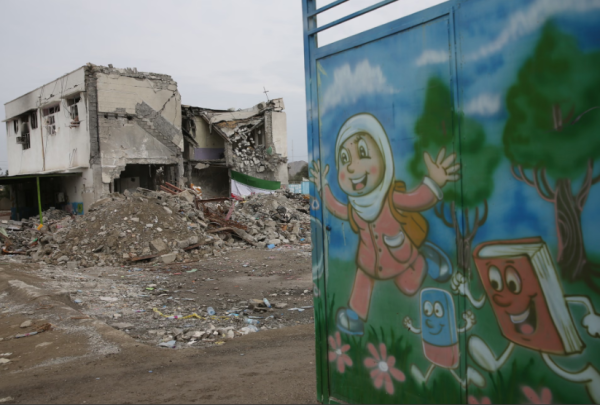
One of the first large attacks against Iran happened February 28th, 2026. This attack was on a school in Minab Iran, and resulted in the deaths of around 170 people- 100 of those deaths being children.
Despite what the president of the united states said following shortly after the attack, this was not Iran’s own doing. The school was blown up with a tomahawk missile, a type of weapon that Iran does not have. PBS news says that, “Reporters pressed Trump twice about the strike, which video evidence shows was carried out by a Tomahawk cruise missile, an American-made weapon that can be launched from ships, submarines or ground launchers at targets 1,000 miles away.”
Trump talking about this https://youtu.be/A31n2-8udN8
Again, there is no proof of Iran having the kind of missile that the president is claiming they used to blow up their own school, “The only other countries using Tomahawks are Japan, the United Kingdom, Australia and the Netherlands,” said Mark F. Cancian, a senior adviser for the Center for Strategic and International Studies, a national security-focused think tank. “Iran has none, though it has lots of missiles of different kinds.”
The U.S. Navy is also requesting $3 billion to replenish its stockpile of Tomahawk missiles (just the missiles I’m not talking about other weapons) that have been depleted over the course of the Iran war, according to the Defense Department’s fiscal 2027 budget request. In fiscal 2026, Congress granted the service $257 million for the purchase of 58 Tomahawk missiles.
On April 7th, war budgeting expert Linda Bilmes wrote for the Harvard Kennedy School stating, “The president is proposing roughly a 50% increase in the defense budget. If enacted in full, that would push defense spending to levels about 20% higher than the peak reached during World War II. This raises the baseline. Even if Congress does not agree to approve the full increase, it is highly likely that at least $100 billion per year will be added to the base defense budget that would not have been approved in the absence of this war.”
Back in July of 2021, former U.N. World Food Programme Executive Director David Beasley mentioned it would take an estimated $40 billion each year to end world hunger by 2030. Not hunger just in America, but the world. Just thought I’d throw that out there.
Well the school building that was hit used to be a part of an IRGC (Islamic Revolutionary Guard Corps) compound, however it has been separated since 2016 (ADD PICTURE). This fact along with evidence gathered indicating that the school building was directly struck, alongside 12 other structures in an adjacent IRGC compound, points to a failure by US forces to take precautions avoiding civilian harm in carrying out the attack, which is a breach of international humanitarian law.
As Amnesty International says, “The fact that the school building was directly targeted and was previously part of the IRGC compound raises concerns that US forces may have relied on outdated intelligence and failed in their obligation to do everything feasible to verify that the intended target was a military objective.”
The New York Times says, “Military targeting is very complex and involves multiple agencies. Many officers would have been responsible for verifying that the data is correct, and officers at Central Command are responsible for checking the information they receive from the Defense Intelligence Agency or another intelligence agency. But in a fast-moving situation, like the opening days of a war, information is sometimes not verified.”
There are many thoughts floating around that AI was used to make the decision to strike the school. As described by the Washington Post, this is because, “the military’s Maven Smart System, which is built by data mining company Palantir, is generating insights from an astonishing amount of classified data from satellites, surveillance and other intelligence, helping provide real-time targeting and target prioritization to military operations in Iran, according to three people familiar with the system.”
Also on March 11th, 2026, US Central Command (CENTCOM) Commander Brad Cooper confirmed that the USA was using advanced artificial intelligence tools to process large amounts of data related to the operations.
The USA’s apparent reliance on outdated intelligence, which failed to reflect the long-standing status of Shajareh Tayyebeh Elementary School as a civilian object, would constitute a serious violation of the principle of precaution, particularly the obligation to do everything feasible to verify that an intended target is a military objective.
Tehran and it’s oil refinery’s
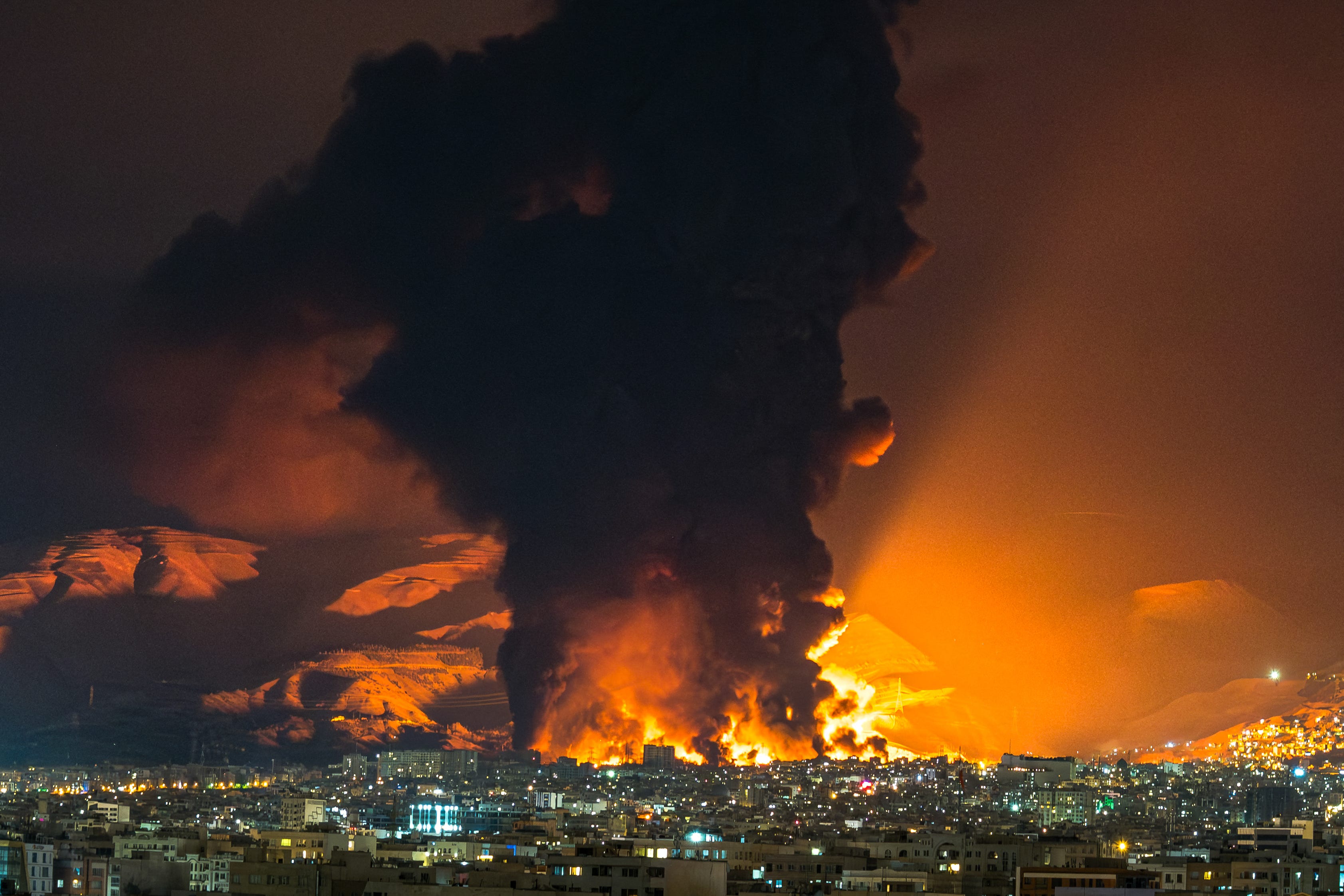
The next large-scale attack against the people of Iran happened hardly 2 weeks later in the evening on March 7th. Four major storage facilities and distribution centers- including the Tehran refinery in the south and depots in Aghdasieh, Shahran, and Karaj- were the main targets of the US missiles that ended up taking the lives of at least 6 people. Local authorities reported four employees, including two tanker drivers, and 20 were wounded at one of the sites.
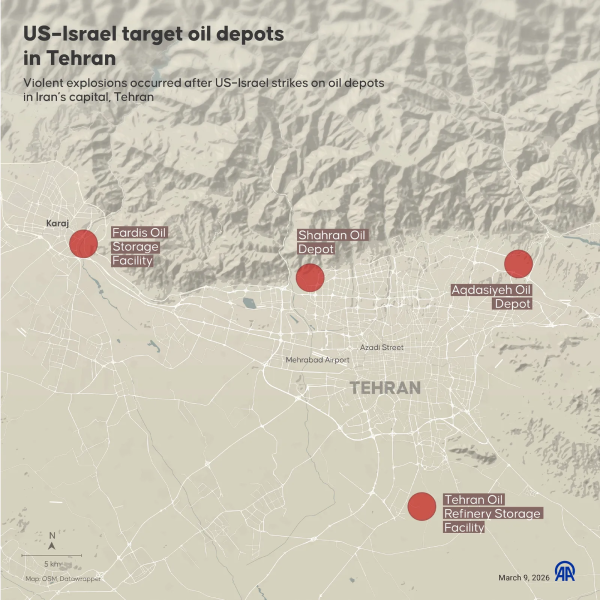
As Mohammad Mansour wrote for Aljazeera, “The medical and environmental fallout is immediate and severe. The Iranian Red Crescent Society (PICTURE) warned that the smoke contains high concentrations of toxic hydrocarbons, sulfer, and nitrogen oxides. The organization noted that any rainfall passing through these plumes becomes highly acidic, posing risks of skin burns and severe lung damage upon contact or inhalation.” Ali Jafarian, Iran’s deputy health minister, told Al Jazeera that this acid rain is already contaminating the soil and water supply, as on Sunday morning, March 8th it did end up raining.
But even without the rain, the air itself still remains incredibly toxic and poses life-threatening risks to the elderly, children, and those with pre-existing respiratory conditions, which have prompted authorities to advise residents to remain indoors. The city of Tehran, which houses almost 10 million people, cannot stop their daily life however.
When residents woke up the day after the attacks, they saw a city without daylight. A Tehran based journalist using the pseudonym Ariya Farahmand interviewed Sina, a 42-year-old father to a five-year-old, who lives in the Sattarkhan neighborhood in central Tehran (far from the burning depots), “When I woke up, the house was so dark I assumed it was heavily overcast… I showered and dressed for work. But the moment I stepped outside, I panicked. A mixture of smoke and clouds, but overwhelmingly thick smoke, had blackened the entire sky.”
“The air smelled horrific, but it wasn’t just the smell. A brief rain shower had turned everything greasy and black. My white car was covered in dark, oily spots.” He continued, “The streets were deserted. It took me about 15 minutes to reach my office, and by the time I arrived, my throat was burning and my head was pounding,” Sina said. “I immediately called my wife. She’s staying home these days to take care of our son. I woke her up, warned her about the toxic smoke, and told her to seal all the windows. She said the baby was still sleeping.” Two days after the attack, Sina told Farahmand that his chest still felt heavy, and he was struggling to breathe normally. Sina was not the only victim of this environmental attack, and he will most certainly not be the last.
I need you to understand that what Tehran experienced is not the same as smog created from car plumes. Harjeet Singh, founding director of Satat Sampada Climate Foundation, says “While daily traffic pollution is bad, it is diluted… A refinery fire is a concentrated strike. The smoke contains much higher levels of heavy metals and unburned chemicals than what comes out of a car’s tailpipe.” Singh relates the difference to “being in a room where someone is smoking versus being in a room that is actually on fire.”
The destruction has also forced the Iranian Ministry of Petroleum to slash daily fuel rations for civilians from 30 litres [8 gallons] to 20 litres [5 gallons].
Since the start of the onslaught against Iran, Tehran has been the most heavily targeted location of the U.S.-Israeli aerial campaign. Other cities, residential areas and civilian infrastructure in the capital have not been spared the relentless bombardment. Hospitals, shops, schools, public squares, and residential buildings have all been hit, in addition to government buildings. But unlike those attacks, the oil facility strikes were impossible to escape. Iran’s Department of Environment formally declared the strikes a violation of human rights, citing the Geneva Conventions.
Israel and the United States claimed they were targeting Iranian military and government sites, but as of April 10th, it has been reported that more than 3,000 people were killed throughout Iran. U.S.-based rights group HRANA said 3,636 people have been killed since the war erupted. It said 1,701 of those were civilians, including at least 254 children.
Recent attacks that you should know about
The U.S. striked and destroyed Karaj Bridge, killing eight people. President Donald Trump celebrated a double tap strike on a highway bridge linking Tehran to Karaj on Thursday, sharing video of the attack that killed eight people and wounded 95.
The second strike occurred as rescue workers responded to the initial attack, according to the Fars news agency. Iranian officials told state media the casualties were civilians who had gathered beneath the bridge and along the riverbank to celebrate Nature Day in Iran. The unfinished bridge intended to connect Tehran to the Caspian Sea.
Our president said tweeted on Twitter saying, “The biggest bridge in Iran comes tumbling down, never to be used again — Much more to follow! IT IS TIME FOR IRAN TO MAKE A DEAL BEFORE IT IS TOO LATE, AND THERE IS NOTHING LEFT OF WHAT STILL COULD BECOME A GREAT COUNTRY!”
I would just like to point out that destroying a civilian bridge is in violation of International Humanitarian Law and is a war crime. I know at this point Trump doesn’t care what laws he’s violating but I just thought that’s something worth noting.
Iran and Cuba worked together to develop indigenous vaccines for covid (because the US blockade had prevented Cuba from getting the vaccines) and America just blew up the institute in Iran. According to Al Jazeera, the 106-year-old Pasteur Institute of Iran in Tehran sustained severe damage from U.S. and Israeli airstrikes on April 2, 2026, rendering the key research facility unable to continue health services.
Ongoing
Our reign of terror in Iran has yet to show any signs of stopping soon. With the US saying that Iran will target the US, even though they literally can’t reach us, the thought of what happens next is every present.
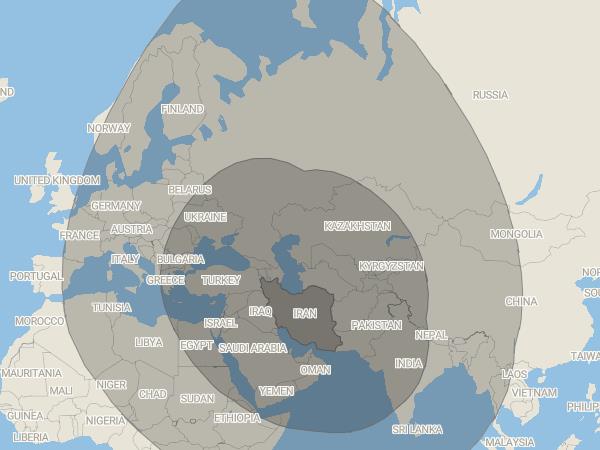
Iain Boyd, director of the Center for National Security Initiatives and Professor of Aerospace Engineering Sciences, University of Colorado Boulder wrote that, “Iran has an extensive ballistic missile program. The country has been developing a number of short-range ballistic missiles for many years. …The ranges of these missiles – up to 500 miles (800 km) – are insufficient for Iran to use them against Israel directly because the closest distance between the two countries is about 550 miles (900 km). However, Iranian-
backed militias have deployed these weapons in neighboring countries, such as Lebanon and Syria, and have launched them from there in attacks against Israel.”
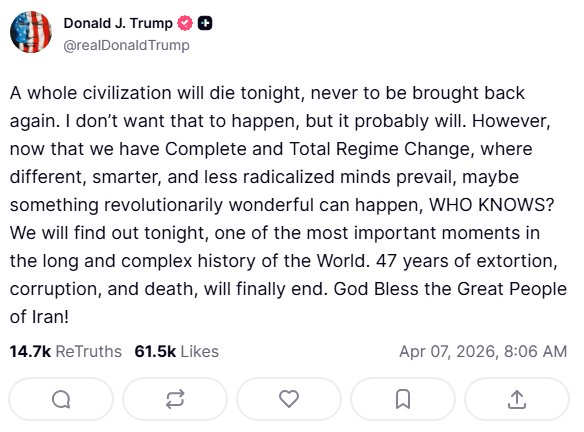
Because of all this a good chunk of people online are worried that Trump will use a nuclear weapon. This would be the part where I would assure you that the chances of nukes being dropped is slim and we have nothing to worry about. Unfortunately, the president of the United States makes me unconfident in saying that. You be wondering “well what the hell are we going to do if nukes are dropped?!” Well fear not, because the democrats will write many strongly worded statements about how unacceptable it is and the republicans will… just keep doing what they’ve been doing. Which is excusing the murder of innocent people of course. So yeah either way we are low key cooked.
Again, this conflict does not seem like it will end within the coming days of this article being posted and I cannot talk about everything that has happened to Iran. I just wanted to highlight some of these major news stories that it feels like no one in the real world is actually talking about. If these acts were being done to any country In Europe (perhaps a white country dare I say) then you best believe there would be more of a push for the conflict to end by the American citizens. Now that’s just speculation of course, and an assumption that I’m making based off of the United States reaction to the war in Ukraine (that is still going on by the way).
Why this all matters
There are lots of bad things happening all over the world and in our own country. Just pretending like they don’t exists and “focusing on ourselves” does not make these problems go away, it only helps them grow and become worse.
We are at a point where if a whole lot of people don’t start caring right now, every bad thing that I mentioned (and didn’t mention) in this article will just get worse. You have an obligation to educate yourself. Assuming you are reading this as an American, you have a duty as someone living in the imperial core to know what your country is doing.
Educating yourself
While paying attention to politics can be incredibly taxing on students, this is a period in history where we can not afford to be unaware of what is happening in the world around us.
What I do to help keep myself informed while not letting the weight of doom and despair crush my soul, is regulation. Almost every single day I listen to Hasan Piker (A political streamer/ commentator who I mentioned a couple times at the beginning of this article) give an update of what big things are happening politically in America and around the world. When I first started tuning in I would only listen for about 30 minutes or so as he streams for 6-8 hours every day.
Over time I have started to just play him in the background when I’m doing homework or lollygagging on my computer. If I hear something that sounds important, I sit and listen to what he has to say, and if I feel like I need more context or information about the topic he’s discussing, I simply do my own research.
I’m not saying you have to go and listen to Hasan every single day in order to keep yourself politically informed (he’s not really everyone’s cup of tea), but just finding someone out there on the internet who you feel can give you the best information about stuff that’s happening is a great step in keeping yourself informed. The reason I listen to Hasan is because not only does he stream every day, but I feel he provides information about topics (although quite passionately) in a way that doesn’t just give me one side of an argument and leave it there.
Something else that you can do if you don’t like listening to people yap is familiarizing yourself with multiple different news sources and journalists and just like, check in on them once a week or something and see what updates they have. A news source that I used quite a bit in this article was Drop Site News. They are a nonprofit investigative news outlet founded by Ryan Grim and Jeremy Scahill in July 2024. It is based in Washington, D.C. and is described as non-aligned (parties that maintain neutrality, choosing not to align with, support, or depend on major power blocs or military alliances) and anti-establishment (opposing or questioning the traditional, powerful, and elite institutions that control society, politics, or economic systems). Other media organizations have described Drop Site News as an independent news website. They have dozens of different journalists writing on the ground reports of what is happening all over the world.
Closing thoughts
I find it all so dystopian that I have the privilege of getting to shop for a dress to wear at my Highschool prom, meanwhile over in foreign lands, and even here at home, people my age are being murdered and burying their family in the name of keeping America “free.”
And I find it kind of gross how a lot of people had more empathy for a baby monkey whose biggest tragedy was not being accepted by its mother, yet the same people will stay silent for real human children who have to watch their mothers die in from of them.
I think it’s really telling how little the people of this country (and this school too it feels like) seem to care about what is happening around the world despite the fact that some of their problems are because of the United States. I think it’s also a little telling how everyone cared so much about what happened in Ukraine (majority white population), and yet when it comes to these countries…I don’t want to say its racism. But I fear it is racism, along with a little bit of apathy.
I have so many friends and know too many people (none of whom will read this article) that are going into fields of study that require them to have empathy for the people that they will soon be dealing with in the future. And yet these same people will be some of the first to dismiss or ignore the people facing crisis that need empathy the most.
The day I stop caring for a person being strangled by the hands of my government is the day those people are free or I am dead. I am in position where even just talking about one of the subjects discussed in this article could bring harm to my family (and I’m not just talking about in a #haters kind of way), and yet hear I am, writing a damn 11,000 word think piece esk thesis to try and bring awareness to what is going on.
There are some of you out there reading this who would lose nothing to speak up and raise awareness about any one of the big headline stories in this article. And yet you, in your glorious privilege, will stay silent. If you read this article through and actively took part in educating yourself (Or even if this just helped you change your mind) on the atrocities committed at the hands of our leaders, then I commend you and hope that you are inspired to further your knowledge on what is happening around the globe. However if you read this article through- or even if you didn’t and just skipped to the end- and still are in support of what is happening overseas and here at home, then I sincerely hope you change for the better.
We cannot let apathy be the norm. You have to mourn the lives of strangers you have never met and love the children across the globe, whose names you never knew. Fascism thrives on dehumanization; we cannot give it space to grow.
*everything that was spoken about in this article is fact and comes from real evidence from real journalist. It is not illegal to speak out against crimes against humanity under the first amendment and the international human rights law (specifically Article 19 of the International Covenant on Civil and Political Rights (ICCPR)).