
















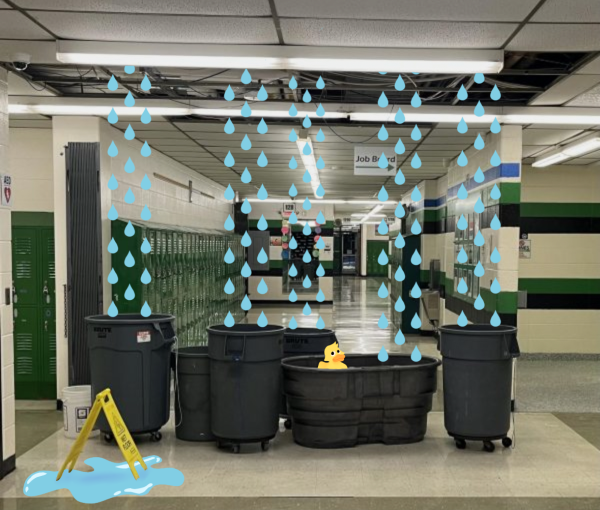
In early February, after numerous snow days, what started off as a small leak turned into water dripping into multiple bins taking up the hallway. By February 6th, it was at its worst, with a whopping 6 bins being used to collect the water. Although it was difficult to move through the hallways, students handled the situation with maturity. Soon enough, the bins were filled with not just water, but rubber ducks and coins!
If you thought the leak from the outside was bad, the scale of the damage on the inside was much, much worse.
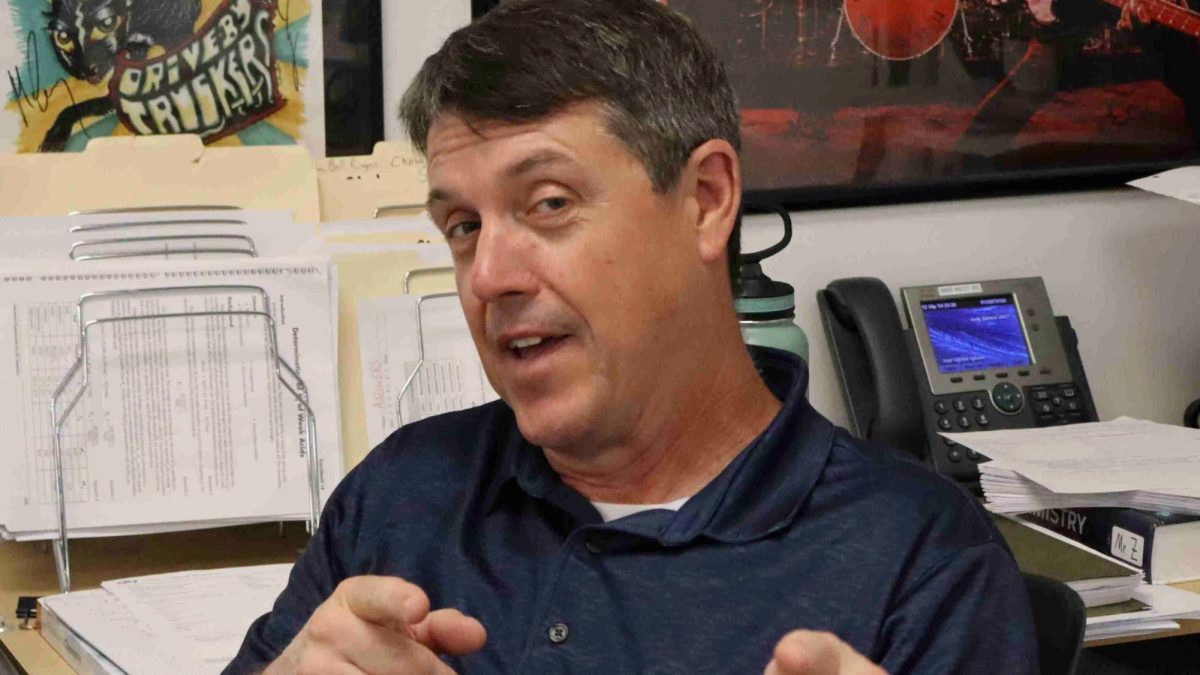
“What you were seeing coming through the roof into the actual building itself was small compared to what the actual size of the area we were looking at,” said Sean Klee, the maintenance supervisor.
Because the roof is older, it is more susceptible to damage. Our roof has three major sections; the deck, which is the metal part, the foam insulation, and the rubber coating which is called a membrane. All of the moisture was happening inside of the insulation section. Weight and temperature affect the roof, so when it gets cold or has too much pressure put on it, it becomes brittle.
“We had over a foot of snow, so you’re looking at thousands of thousands of gallons of water on top of the roof,” said Klee. “That’s why it leaked for so long.”
The maintenance crew had to wait for the whole roof to thaw out before they could start working on the leak. With
leaks at the other, newer schools and smaller leaks everywhere, Klee says that he usually calls the roofing contractor to come in and they repair it within forty-eight hours. They create a seal to patch the leak with some roof adhesive and special rubber mats.
Although they used the same method for this leak, this situation was different due to the age of the building.
“When you’re trying to patch something that is older with brand new rubber, you’re going to have them expand in different ways,” said Klee.
While this leak was definitely one of the worst, that specific area in the hallway has had other leaks in the past. It’s only a matter of time before it’s no longer feasible to keep patching the roof up, so the maintenance crew has been working for a while to figure out how to best replace that area.
“When you’re going to replace a roof this big, it’s a really big job,” said Klee.
The newer schools have thicker insulation in their roofs compared to our school. The newer schools’ roofing material is also stronger and more versatile, according to Klee.
Kris Niehaus, the assistant principal, says it would be ideal to build a new school altogether, although this has been made difficult with the budget cuts from the state.
Niehaus gave a personal thanks to everyone for practicing leadership, one of our four core values, during this situation.
“I think all the students and staff reacted positively in the best they could,” said Niehaus.
I think I speak for everyone at William Henry Harrison High School when I also say thank you to our maintenance crew for working so hard to keep our building clean, safe, and not flooding with rubber ducks!